Overview
At a glance
Is this game right for my group?
ABG editorial scores on a 1–5 scale.
Harder to teach
High replayability
Highly interactive
Scales well
Deep strategy
How it plays
How does it play?
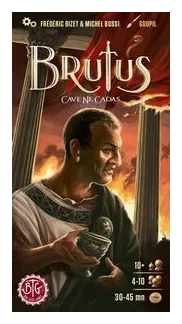
The goal of the game is always to be the first to get rid of his cards to score victory points and the theme of the game resumes the rivalry between Brutus and his father-in-law Caesar.
Core mechanisms
Key systems that shape the decisions players make.
Read the full game description
The goal of the game is always to be the first to get rid of his cards to score victory points and the theme of the game resumes the rivalry between Brutus and his father-in-law Caesar. The first player is called Imperator and after the cards are dealt by the Slave player, he decides how many cards (1, 2 or 3) will be exchanged during the forum phase. Each player discards this number of cards and in the order of play, players take the cards of their choice. The slave discards the remaining cards. The Imperator then plays a combination of cards (one or more cards of the same value, the cards being numbered from 1 to 13). The next player may pass or play the same number of cards but of higher value. This is played until no one wants (or can) beat the current combination. The player who placed this combination starts the next round. Brutus is the weakest card in the game but it is the only card that can beat the strongest card that is ... Caesar. And we can play any card on Brutus, which can only be played on Caesar. If the winning combination has a value between 9 and 13, it triggers an effect in favor of the player who asked it (discard cards, give cards to his opponents, earn points ...). When a player no longer has a card in hand, he scores points of glory that vary according to the number of players and takes the Position card corresponding to his place (from the first Imperator to the last Slave). When only one player remains with cards (who becomes the new slave), the round is over. After several rounds (to be defined at the beginning of the game), the player with the most points is the winner. Not the same game as Brutus: The Board Game