Overview
At a glance
Is this game right for my group?
ABG editorial scores on a 1–5 scale.
Harder to teach
High replayability
Highly interactive
Scales well
Deep strategy
How it plays
How does it play?
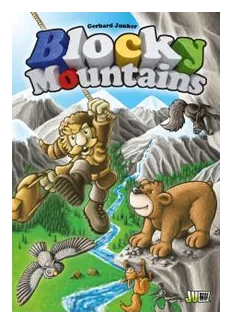
Blocky Mountains is a dexterity game playable with 2-7 players in either a cooperative or with 2-4 players in a competitive manner or as a solo game.
Core mechanisms
Key systems that shape the decisions players make.
Read the full game description
Blocky Mountains is a dexterity game playable with 2-7 players in either a cooperative or with 2-4 players in a competitive manner or as a solo game. The core of the game consists of 3D landscapes that you build with large wooden blocks, after which you try to maneuver a large wooden pawn ("the trapper") over this course. In competitive play, you want to be the first to reach the mountain summit on the score track ("the route map"), and to do so you must master several challenges. Each challenge consists of a parcours built out of the wooden blocks according to the challenge card you draw randomly from three piles: A - C, from easy to difficult. After having built the landscape course, you have to push, pull, lift, slide or swing the "trapper" from the start to the end block. This trapper has a metal eye on top, and you move it with a wooden rod with a hook at its end. Some challenges require an intermediate string between rod and pawn, while others require both hands to simultaneously move pawn and grizzly bear, the bear being another wooden piece. A third kind of piece to be moved is provisions, which you "kick" with the trapper. When you master the challenge, the next player decides whether to change to the next parcours or try to master the same one again. Depending on the difficulty of the challenge, your piece can move 2-4 steps toward the summit. If you lose track, fall down, or lose your provisions, you have lost this challenge and must move backward! The game includes other details – e.g., owls and squirrel tokens for managing your skills and special actions – but this is more or less the whole game.