Overview
At a glance
Is this game right for my group?
ABG editorial scores on a 1–5 scale.
Harder to teach
High replayability
Highly interactive
Scales well
Deep strategy
How it plays
How does it play?
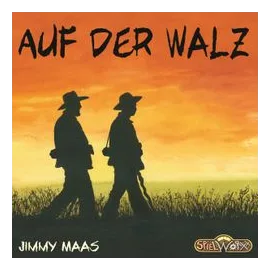
Auf der Walz is a game that has the "journeyman years" as the topic. This is a tradition that dates back to medieval times and is still alive in German-speaking countries.
Core mechanisms
Key systems that shape the decisions players make.
Action Points
Spend a limited allowance of points across several possible actions each turn.
Hand Management
Time and sequence a limited hand of cards to preserve future options.
Network and Route Building
Create connected routes that improve reach, delivery, control, or scoring.
Tile Placement
Place tiles to build a shared or personal spatial arrangement.
Point-to-Point Movement
Move along explicit connections between named locations or nodes.
Read the full game description
Auf der Walz is a game that has the "journeyman years" as the topic. This is a tradition that dates back to medieval times and is still alive in German-speaking countries. A craftsman has to be "Auf der Walz" (roughly translated as "on the road") for three years and one day without ever getting closer than fifty kilometers to home. The young journeyman wears a traditional dress: flared pants, waistcoat, jacket, black hat (as a symbol for freedom), the "Stenz" (traditional curled hiking pole), and the "Charlottenburger" (coarse cloth to wrap up the belongings). They work (for a little bit of money but also for board and lodge) for people on their journey. Auf der Walz is a "travel game" with resource management that takes place in the second half of the 19th century. Like life on the Walz, it includes uncertainty and random elements. Each player earns points at the end of each year on the journey and in an end-scoring after that additional one day. The engine of the game is a deck of cards. Each player has six cards per year (and an additional card for the last day) and conducts actions with them: traveling, working, finding travel mates, etc. as well as leisure activities: music, writing, painting. —description from the publisher