Overview
At a glance
Is this game right for my group?
ABG editorial scores on a 1–5 scale.
Harder to teach
High replayability
Highly interactive
Scales well
Deep strategy
How it plays
How does it play?
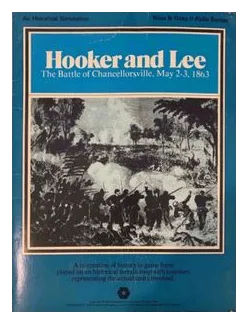
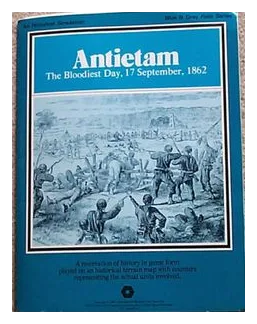
Increasingly regarded as THE pivotal battle of the civil war, this "mini" game is based on rule systems from Borodino and Austerlitz; included in and shares basic rules with others in the SPI Blue & Gray Folio Series (Chickamauga, Gettysburg and Shiloh) Scale is 400 meters/hex.
Core mechanisms
Key systems that shape the decisions players make.
Grid Movement
Move pieces between adjacent spaces on a regular grid.
Dice Rolling
Roll dice to introduce uncertainty into actions, production, movement, or resolution.
Movement Points
Spend a movement allowance across spaces with different costs.
Hexagon Grid
Use a hexagonal map where each space connects evenly in six directions.
Combat Results Table
Compare opposing strength as a ratio, then consult a table to resolve combat.
Zone of Control
Restrict or influence movement through areas controlled by nearby pieces.
Read the full game description
Increasingly regarded as THE pivotal battle of the civil war, this "mini" game is based on rule systems from Borodino and Austerlitz; included in and shares basic rules with others in the SPI Blue & Gray Folio Series (Chickamauga, Gettysburg and Shiloh) Scale is 400 meters/hex. 1-2 hours per Game Turn. Union Movement Restrictions are used to reflect McClellan's lack of aggression. Rigid Zones of Control, retreat and advance after combat, and Sequential Player Turns are common to these games, but a new concept, "Attack Effectiveness" is introduced. Surrounding to cut off retreat is a major strategy. Fairly wide open terrain, defense specifics (like Bloody Lane) are not detailed but "Burnside Bridge" is.