Overview
At a glance
Is this game right for my group?
ABG editorial scores on a 1–5 scale.
Harder to teach
High replayability
Highly interactive
Scales well
Deep strategy
How it plays
How does it play?
Of the many mah jongg (mah jong) variants extant today, American mah jongg is unique. The single most popular variant in North America, it's also the least well documented.
Core mechanisms
Key systems that shape the decisions players make.
Read the full game description
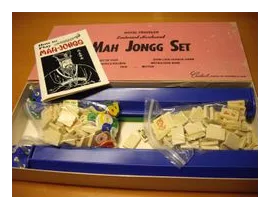
Of the many mah jongg (mah jong) variants extant today, American mah jongg is unique. The single most popular variant in North America, it's also the least well documented. Prior to the publication of this book (A Beginner's Guide to American Mah Jongg, Elaine Sanberg, 2010), you could not find anything about the American game in bookstores. Instead what you would have found is descriptions of various modern regional variants, the classic Chinese rules (still played today in Europe), or the rules played in Australia or the United Kingdom. Modern American rules, and especially strategy tips, were simply nowhere to be found (Sandberg, Tuttle Publishing, 2011). The American game of Mah Jongg differs in more than the spelling with two "G"s on the end. In the 1920s, when the Chinese game hit the United States, Babcock's rules and R.F. Foster's rules were largely discarded. Each group developed their own house rules and special hands. In 1937 the National Mah Jongg league standardized and streamlined the scoring system. Elements like Jokers and the Charleston which were part of various card games found their way into the game. Each year a Scoring Card of hands and rule changes is released. In 1999 the American Mah Jongg Association published its own scoring card each year and sponsors cruises and special events. American Mah Jongg is a rummylike game for four players. Players try to capture pungs, kongs, quintets, and sixtets from discards and complete hands listed in a scoring card released by one of the two Mah Jongg leagues.