Overview
At a glance
Is this game right for my group?
ABG editorial scores on a 1–5 scale.
Harder to teach
High replayability
Highly interactive
Scales well
Deep strategy
How it plays
How does it play?
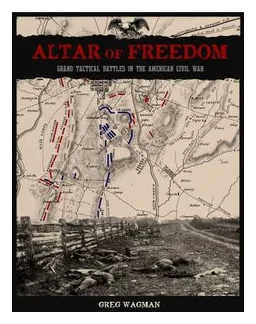
"Altar of Freedom: Grand Tactical Battles in the American Civil War" is a set of miniatures wargame rules for fighting the largest battles of the American Civil War in 6mm scale.
Core mechanisms
Key systems that shape the decisions players make.
Auction/Bidding
Bid against other players to determine who receives an item, action, or priority.
Dice Rolling
Roll dice to introduce uncertainty into actions, production, movement, or resolution.
Line of Sight
Visibility between pieces determines valid targets, movement, or effects.
Variable Player Powers
Each player has different abilities, restrictions, or strategic advantages.
Simulation
Model a real or imagined system through detailed cause-and-effect rules.
Read the full game description
"Altar of Freedom: Grand Tactical Battles in the American Civil War" is a set of miniatures wargame rules for fighting the largest battles of the American Civil War in 6mm scale. This system is designed for real historical scenarios like Antietam or Chickamauga, not for points-driven tournament matches. Your role as a player will be to step into the boots of a corps or army general. Operating at the highest levels of command, you will not bother yourself with micromanaging regiments or interfering in the affairs of your colonels. Your challenge will be coordinating your divisions to be in the right place at the right time and wrestling with the out-sized personalities of your corps commanders. The rest, as Robert E. Lee might say, is in God's hands. Grand Tactical: The rules are designed for 6mm/10mm miniatures, with an available conversion to 15mm. One turn is approximately one hour, 1" = 150+ yards, and 1 base = 1 brigade. Basing is flexible, so long as both armies are based in the same manner. Altar of Freedom is a turn-based game, although the duration of each turn is determined by a variable Turn Clock. At the start of each turn, players secretly bid Priority Points for the opportunity to maneuver their divisions before the enemy. After the secret bidding, players reveal their highest bids and begin maneuvering divisions in order of priority. After each new bid is reached, players roll to remove time from the Turn Clock. The Turn Clock is the strategic center-piece of the game, since players vie for control of the clock throughout the battle. He who controls the clock can manipulate the speed of the countdown. When the clock does expire, the turn ends immediately and players complete some minor adjustments before proceeding to the next turn. Because all games are based on historical scenarios, every battle has a defined end with victory conditions for each commander.