Overview
At a glance
Is this game right for my group?
ABG editorial scores on a 1–5 scale.
Harder to teach
High replayability
Highly interactive
Scales well
Deep strategy
How it plays
How does it play?
"History punishes those who come too late." - Mikhail Gorbachev 1989: Dawn of Freedom is an exciting, fast paced game simulating the end of the Cold War in 1989. During this amazing year, a series of democratic revolutions ended the 40 year Soviet empire in Eastern Europe.
Core mechanisms
Key systems that shape the decisions players make.
Area Majority
Compete to have the strongest presence in areas that award control or points.
Campaign Card Play
Play cards to command conflicts and carry consequences through a campaign.
Dice Rolling
Roll dice to introduce uncertainty into actions, production, movement, or resolution.
Hand Management
Time and sequence a limited hand of cards to preserve future options.
Simulation
Model a real or imagined system through detailed cause-and-effect rules.
Events
Triggered events alter the shared state, rules, or available choices.
Read the full game description
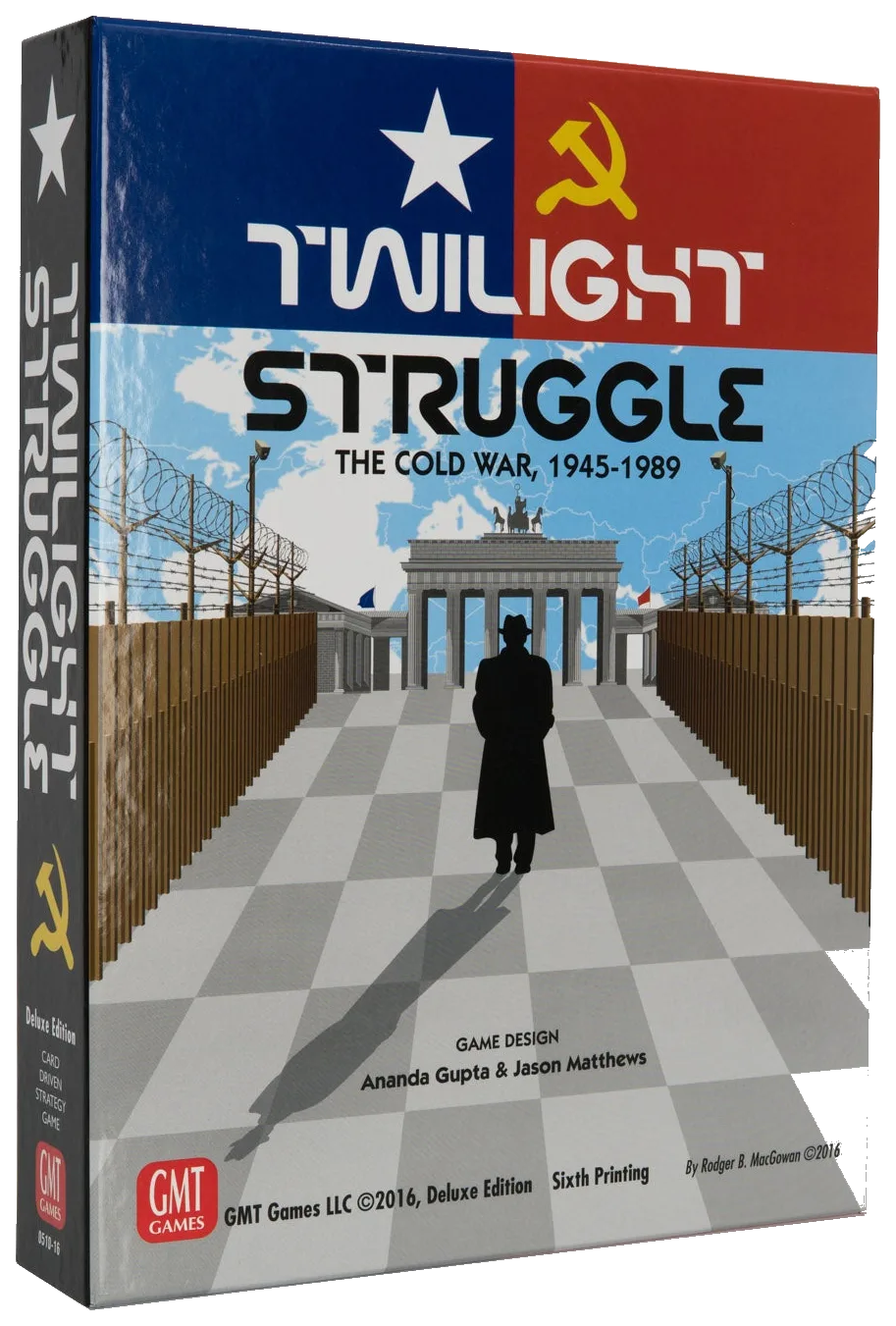
"History punishes those who come too late." - Mikhail Gorbachev 1989: Dawn of Freedom is an exciting, fast paced game simulating the end of the Cold War in 1989. During this amazing year, a series of democratic revolutions ended the 40 year Soviet empire in Eastern Europe. 1989 simulates the political, social and economic aspects of these revolutions using a card-driven system similar to Twilight Struggle. "No man is so old he cannot live one more year." - Leszek Kolakowski One player plays the Communist. At the start of the game he holds unquestioned power across the six nations of the Warsaw Pact. But there are ominous clouds on the horizon. The new leader in Moscow has declared no more will Soviet tanks prop up tottering Communist governments. The economies, after decades of central planning and stagnation, have reached various stages of crisis. Inside the churches and among the students and their professors there are dissident movements that have been emboldened. From crushing dissent to offering concessions, the Communist player will have to use a variety of strategies in a struggle to hold on to his empire. "A bad regime is never in so great danger as when it tries to improve." - Alexis de Tocqueville The other player plays the Democrat. At the dawn of 1989, behind the iron curtain, no one considers revolution possible. The goal of dissidents is to create a civil society outside the control of the Communist regimes. On their side are students who are fascinated with the style and pop culture of the west, and the Church. Against them is the vast apparatus of the Communist state. Their challenge is to persuade the workers, who are the bulk of society, to join their cause. "Mr. Gorbachev, open this gate. Mr. Gorbachev, tear down this wall!" - Ronald Reagan