Overview
At a glance
Is this game right for my group?
ABG editorial scores on a 1–5 scale.
Harder to teach
High replayability
Highly interactive
Scales well
Deep strategy
How it plays
How does it play?
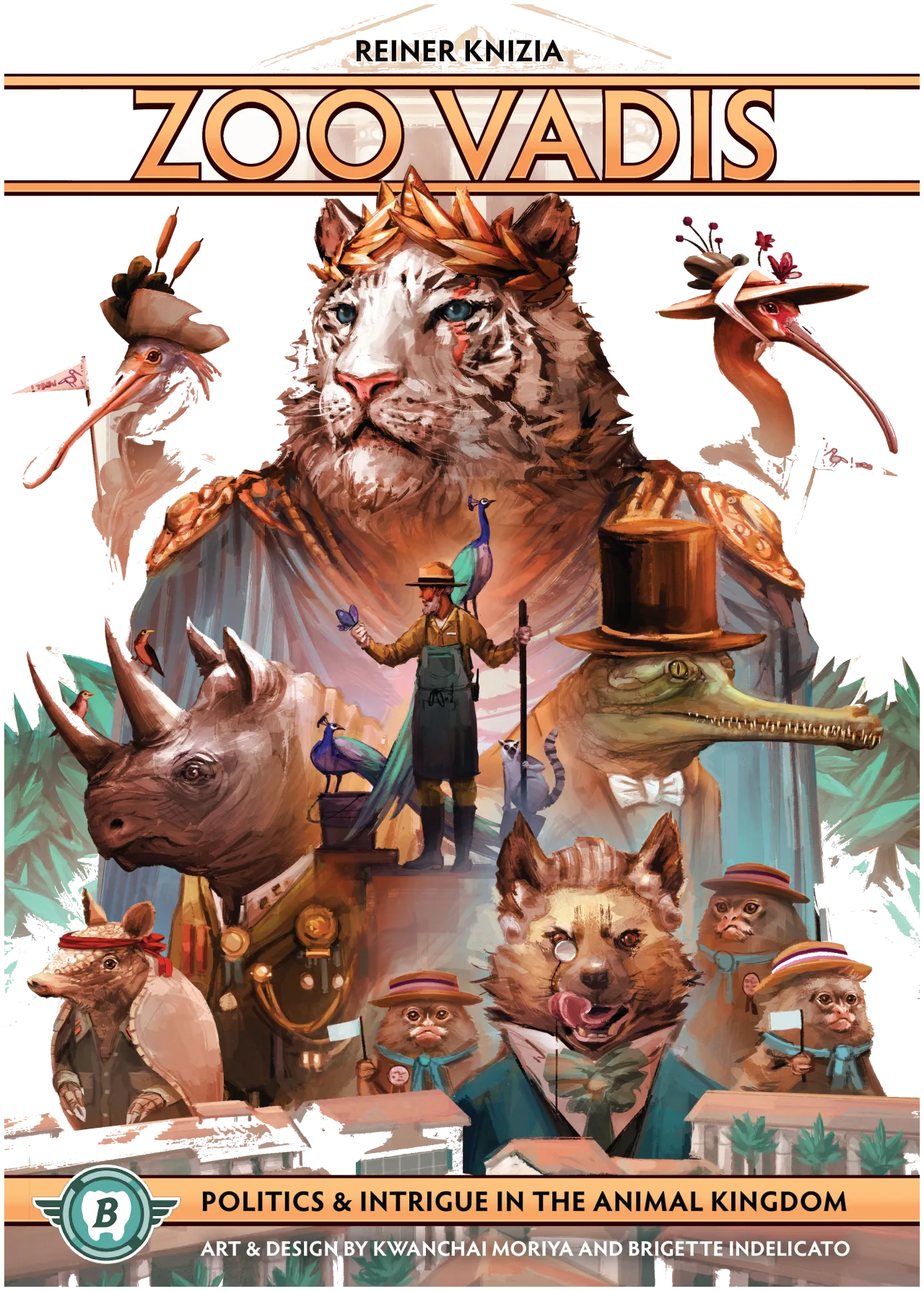
What if the animals were the ones who ran the zoo? …Presumably, this wild government would be built upon the support of fellow creatures and fueled by the fame, attention, and prestige of wide-eyed visitors.
Core mechanisms
Key systems that shape the decisions players make.
Negotiation
Make proposals, promises, or deals directly with other players.
Bribery
Offer resources or incentives to influence another player’s decision.
Hidden Victory Points
Some scores remain concealed until a reveal or the end of the game.
Point-to-Point Movement
Move along explicit connections between named locations or nodes.
Once-Per-Game Abilities
Each powerful ability may be used only once during the entire game.
Read the full game description
What if the animals were the ones who ran the zoo? …Presumably, this wild government would be built upon the support of fellow creatures and fueled by the fame, attention, and prestige of wide-eyed visitors. Naturally, the most aspirational beasts would lobby for a position in the star exhibit, and the lead star would be elected Zoo Mascot. In order to join the star exhibit, each species must campaign its way up the hierarchy of enclosures with the majority support of animal voters. And the lead star will be the species that has earned the most laurels from both raving fans and jealous rivals along the way. How does one gain support and earn laurels? Through crafty politicking, clever negotiations, and ruthless schemes. There can only be one Zoo Mascot, after all. Where are you going? That is the ultimate question of Zoo Vadis. Zoo Vadis is an evolution of Reiner Knizia’s classic negotiation game, Quo Vadis? It retains the elegant, political gameplay that fans have come to love while introducing many innovations and improvements by: Enhancing the 3-player game and tailoring the board to all player counts through neutral, bribable figures—roaming peacocks Widening the player count with a second game board for 6-7 players Expanding the possibilities for strategic negotiation with asymmetric animal abilities Increasing tactical opportunities with new special laurel tokens Broadening the appeal of the theme and presentation with vibrant zoo art by Kwanchai Moriya and Brigette Indelicato Enlivening the production with chunky animal figures and functional player screens Like the original design, the game ends immediately when the Star Exhibit is full. Only the animals who have reached the Star Exhibit qualify for victory, and the winner is the player with the most laurels. –description from publisher