Overview
At a glance
Is this game right for my group?
ABG editorial scores on a 1–5 scale.
Harder to teach
High replayability
Highly interactive
Scales well
Deep strategy
How it plays
How does it play?
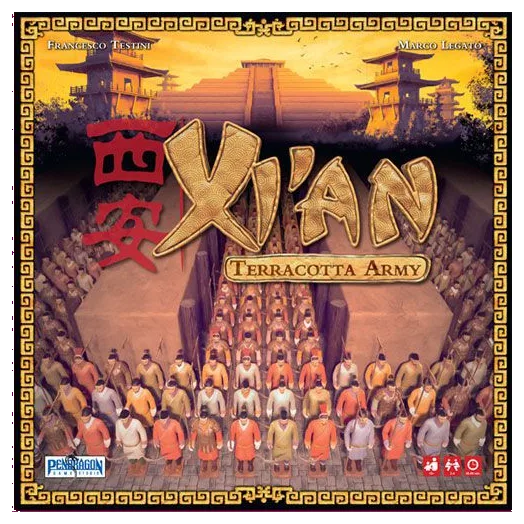
246 BCE: The future first emperor of China, Ying Zheng, orders the construction of the Terracotta Army. It will be part of the "Great Mausoleum", a monument built to celebrate the Qin dynasty's endless glory and also to protect him in the afterlife.
Core mechanisms
Key systems that shape the decisions players make.
Area Majority
Compete to have the strongest presence in areas that award control or points.
Set Collection
Gather related items that become more valuable when scored together.
Hand Management
Time and sequence a limited hand of cards to preserve future options.
Simultaneous Action Selection
Choose actions secretly or concurrently before revealing them together.
Worker Placement
Commit limited workers to action spaces before opponents occupy them.
Read the full game description
246 BCE: The future first emperor of China, Ying Zheng, orders the construction of the Terracotta Army. It will be part of the "Great Mausoleum", a monument built to celebrate the Qin dynasty's endless glory and also to protect him in the afterlife. As a delegate of the Emperor, you will be asked to fulfill his wish by leading a team of workers and helpers to obtain resources, craft and decorate the warrior statues, and supply them with fine wood and bronze weapons. Xi'an is played over six turns, with two rounds in each turn. This means that each player will play exactly twelve times during the game. During each turn, players draw the first four cards from their personal workers deck, then play two rounds in the turn. First, each player choses two cards and sets aside the remaining two cards face down. The second round will use the remaining two cards. After six turns, the player who has gained the most prestige points wins. —description from the publisher