Overview
At a glance
Is this game right for my group?
ABG editorial scores on a 1–5 scale.
Harder to teach
High replayability
Low interaction
Scales well
Deep strategy
How it plays
How does it play?
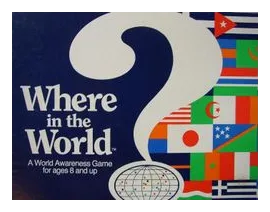
Where in the World is a game that establishes a non-threatening learning environment in which players build upon their geographical knowledge and increase their world awareness. The purpose of the game is to provide a way of communicating, sharing and learning geography.
Core mechanisms
Key systems that shape the decisions players make.
Read the full game description
Where in the World is a game that establishes a non-threatening learning environment in which players build upon their geographical knowledge and increase their world awareness. The purpose of the game is to provide a way of communicating, sharing and learning geography. The game combines elements of chance and competition to create fun in the learning environment. Players start by becoming familiar with the names of countries and the world regions where they belong and then the player progresses thru learning about the distribution of natural resources, languages and religions of differing countries to eventually being able to tie the knowledge of geography to current events. Game includes: 6 Region Boards and 174 Country Cards, 5 wild cards, 1 Category Spinner and 120 Playing Pieces. There are six different rule levels of varying complexity for this game. Frank M. Ehlers is credited with designing two of the levels.