Overview
At a glance
Is this game right for my group?
ABG editorial scores on a 1–5 scale.
Harder to teach
High replayability
Highly interactive
Scales well
Deep strategy
How it plays
How does it play?
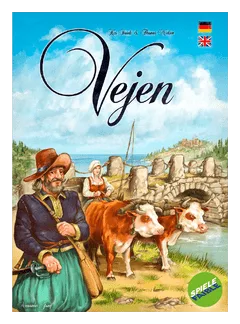
In Vejen, players slip into the role of traders in the late Middle Ages. On many small paths which connect villages in Denmark and Germany, players must set up trading houses, upgrade their ox cart, buy goods, travel long distances, and resell goods.
Core mechanisms
Key systems that shape the decisions players make.
Read the full game description
In Vejen, players slip into the role of traders in the late Middle Ages. On many small paths which connect villages in Denmark and Germany, players must set up trading houses, upgrade their ox cart, buy goods, travel long distances, and resell goods. The game has both a Danish and a German currency, which can change at any time. A game lasts twelve rounds, with each round being divided into four phases: Event phase Income phase Action phase Round-end phase Evaluation phase (only after round 12) At the beginning of an event phase, a new event tile is revealed. An event consists of two parts, one part changing the bid price and the other having events that change the interaction between the players, restrict movement on the game board, or similar. During the income phase, each player receives resources from the trading houses they've built. The main phase is the action phase, during which players can buy resources, build buildings, travel over the Haerveje, and sell resources in other places. You always have to keep an eye on the price in order to sell as profitably as possible. They can accept assignments to get more profit. Only those who expand their trading network and develop their oxcart will be able to win in the end.