Overview
At a glance
Is this game right for my group?
ABG editorial scores on a 1–5 scale.
Harder to teach
High replayability
Highly interactive
Scales well
Deep strategy
How it plays
How does it play?
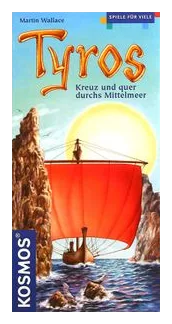
The board shows the ancient Mediterranean area from Lebanon to the straits of Gibraltar. Each player receives a number of ships and cities.
Core mechanisms
Key systems that shape the decisions players make.
Area Majority
Compete to have the strongest presence in areas that award control or points.
Grid Movement
Move pieces between adjacent spaces on a regular grid.
Hand Management
Time and sequence a limited hand of cards to preserve future options.
End Game Bonuses
Earn additional points for meeting conditions evaluated when the game ends.
Resource to Move
Spend resources to determine or increase movement.
Read the full game description
The board shows the ancient Mediterranean area from Lebanon to the straits of Gibraltar. Each player receives a number of ships and cities. The map is divided into rectangles. Four starting rectangles are chosen by drawing location tiles. These areas are allocated one of the four differently colored types of empire counters. Each turn, players can play tiles corresponding to locations on the map. It's mandatory that these are next to tiles that already have an empire counter on them. The new location receives an empire counter depending on already present adjacent ones. Thus the four empires expand during play, as more and more tiles receive their empire counter. The size of the empires will vary from game to game. Players also need to build galleys to control tiles or travel to locations and found a city there. Building and traveling must be paid for with appropriate cards. These are dealt each round, some may be kept and traded. Spend them to your best advantage. At the end of the game players score points for controlling tiles. The amount of points depends on whether a city or galley controls the rectangle and how big the empire is to which the area belongs.