Overview
At a glance
Is this game right for my group?
ABG editorial scores on a 1–5 scale.
Harder to teach
High replayability
Highly interactive
Scales well
Deep strategy
How it plays
How does it play?
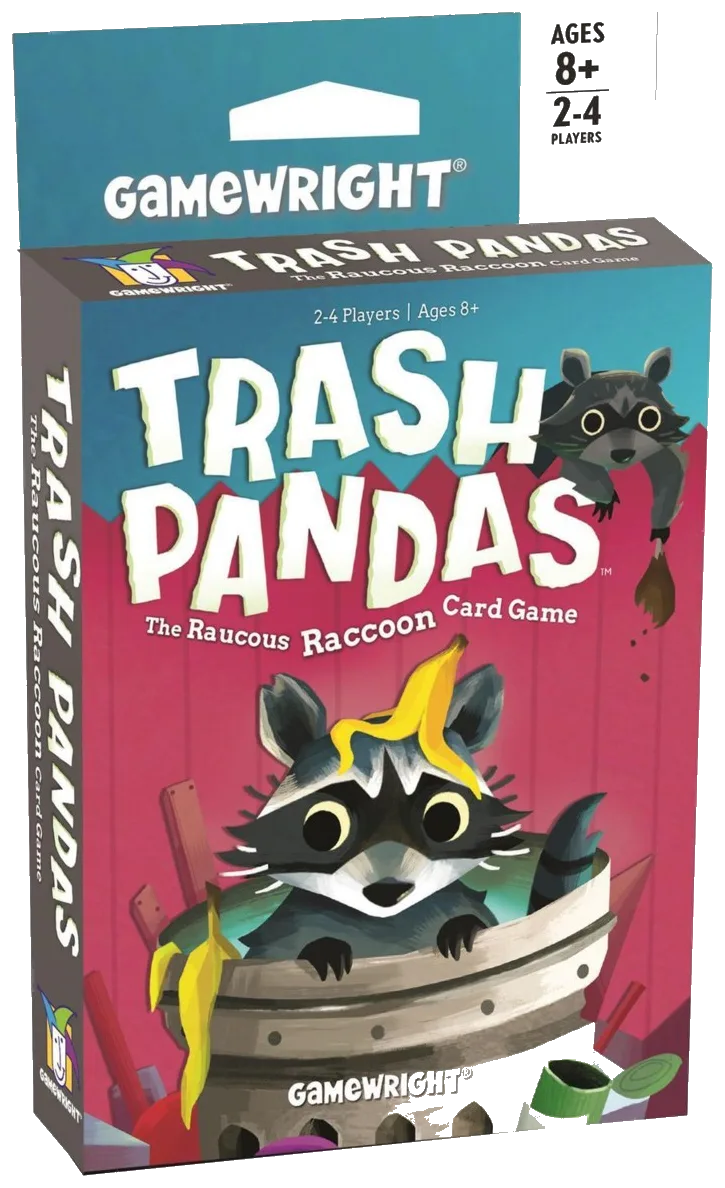
In Trash Pandas, players are raucous raccoons, tipping over trash cans for food (and shiny objects). Players push their luck to acquire more cards, but must stash them in order for them to count as points at the end of the game.
Core mechanisms
Key systems that shape the decisions players make.
Push Your Luck
Choose whether to secure current gains or risk them for a larger reward.
Set Collection
Gather related items that become more valuable when scored together.
Dice Rolling
Roll dice to introduce uncertainty into actions, production, movement, or resolution.
Hand Management
Time and sequence a limited hand of cards to preserve future options.
Take That
Direct negative effects at selected opponents.
Read the full game description
In Trash Pandas, players are raucous raccoons, tipping over trash cans for food (and shiny objects). Players push their luck to acquire more cards, but must stash them in order for them to count as points at the end of the game. When the deck runs out, the game ends and players compare their stashes to see who has the majority for each card type and score points accordingly. The player with the most points wins! In more detail, on a turn the active player rolls a die in the hope of gaining the benefit of the roll result. With each roll, the player decides to keep rolling or stop and activate the dice results. However, with each additional roll, the odds of busting (getting a duplicate result) increase further and the player risks losing the progress they've made that round. When activating the dice results, the player will draw cards, steal cards from other players, and stash cards. Cards in hand may be used for their listed ability, but they count as points only when stashed. —description from the publisher