Overview
At a glance
Is this game right for my group?
ABG editorial scores on a 1–5 scale.
Harder to teach
High replayability
Highly interactive
Scales well
Deep strategy
How it plays
How does it play?
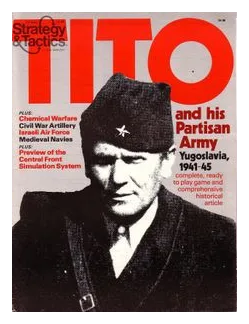
Tito (and his Partisan Army - Yugoslavia, 1941-45) is an abstract simulation of guerilla warfare in the Balkans during the Second World War.
Core mechanisms
Key systems that shape the decisions players make.
Read the full game description
Tito (and his Partisan Army - Yugoslavia, 1941-45) is an abstract simulation of guerilla warfare in the Balkans during the Second World War. The game portrays all of the elements of this dynamic partisan campaign, which successfully tied down large numbers of Axis troops on occupation duties and eventually helped liberate Yugoslavia and Albania from Axis domination. Originally published in Strategy & Tactics magazine #81, the game included a 22"X34" map, 12 page rulebook, and 200 counters. The maps areas are divided into numerous display boxes (each with their own victory point value) which represent mountains, hideaways, and city objectives. The Yugoslav player gains points for occupying these areas. If the Yugoslav player accumulates more than 600 points over the course of the game (17 turns), he wins... otherwise, the German player does. Errata: see this thread.