Overview
At a glance
Is this game right for my group?
ABG editorial scores on a 1–5 scale.
Harder to teach
High replayability
Highly interactive
Scales well
Deep strategy
How it plays
How does it play?
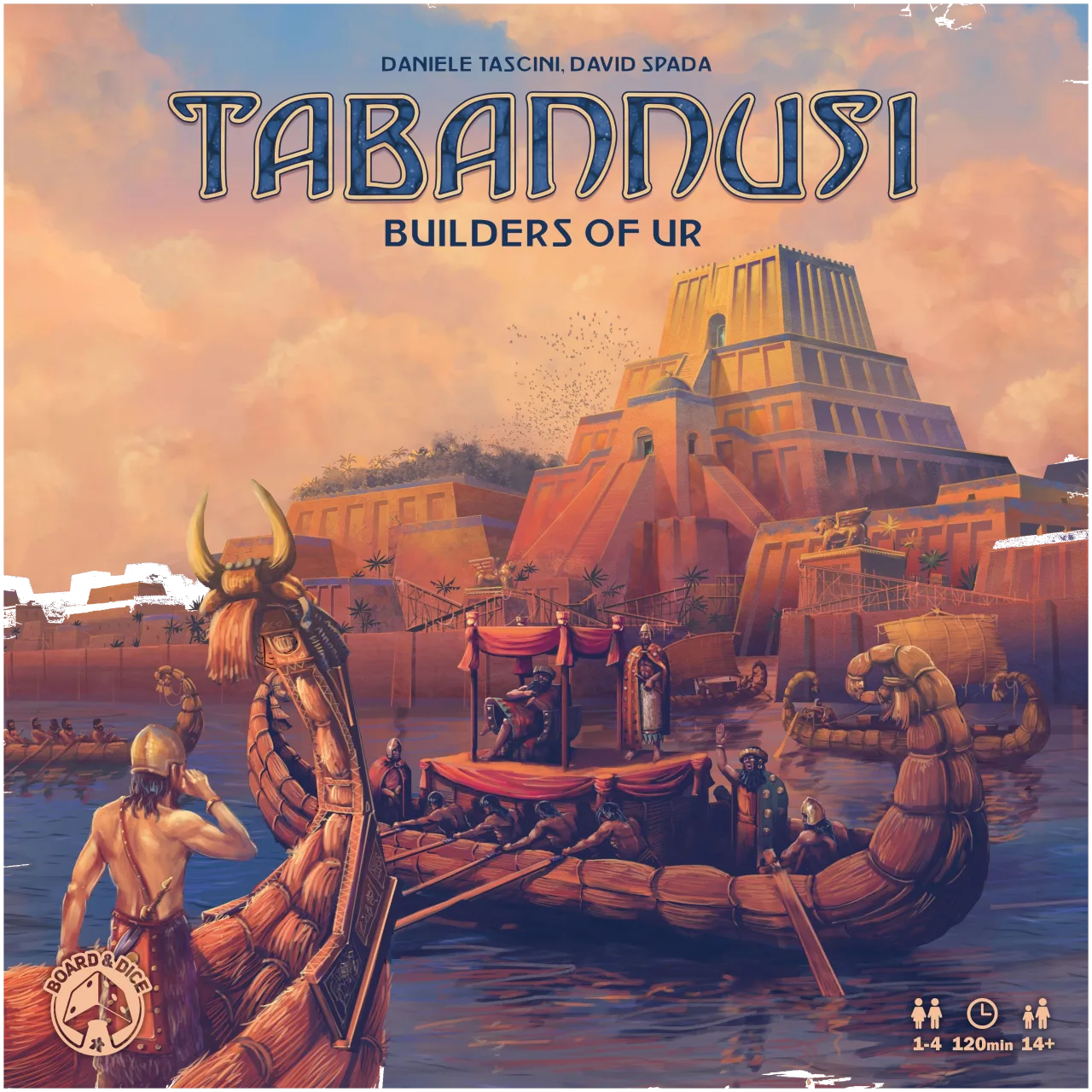
Set in ancient Mesopotamia, a cradle of civilization, at a time when the location of Ur was a coastal region, players work to build the Great City of Ur, expand its districts, and establish themselves as powerful builders.
Core mechanisms
Key systems that shape the decisions players make.
Area Majority
Compete to have the strongest presence in areas that award control or points.
Action Queue
Place actions into an ordered queue that resolves now or on later turns.
Dice Rolling
Roll dice to introduce uncertainty into actions, production, movement, or resolution.
Contracts
Complete specific requirements to earn rewards, income, or victory points.
End Game Bonuses
Earn additional points for meeting conditions evaluated when the game ends.
Read the full game description
Set in ancient Mesopotamia, a cradle of civilization, at a time when the location of Ur was a coastal region, players work to build the Great City of Ur, expand its districts, and establish themselves as powerful builders. Tabannusi: Builders of Ur features a stunning board showing the city of Ur divided into 5 regions, each tied to a specific color die. There are 3 building districts, 1 temple district, and 1 port district. Each turn, your worker will activate one of these districts. When activating a district, you must first take a die from the district. This die matches the color of the district and serves two functions: 1) The die itself becomes a resource of its color. 2) The value of the die determines which district your worker will activate on the following turn. Through various actions you will be able to expand your influence in the various districts, expanding construction sites and turning them into buildings to score valuable victory points. But you will also exert your influence in the temple district in order to earn the king's favor. In the port district you can obtain ships with important abilities and for scoring victory points. You must spend your actions wisely and always make sure that you keep an eye on the general timing of the game. The moment a district is emptied of dice, a scoring will occur. —description from publisher