Overview
At a glance
Is this game right for my group?
ABG editorial scores on a 1–5 scale.
Harder to teach
High replayability
Highly interactive
Scales well
Deep strategy
How it plays
How does it play?
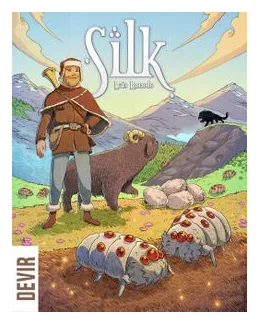
The Imomushi silkworms can live only in the cold peaks of the Akaishi Mountains, and they produce the most delicate and expensive silk in the world. Very few people can withstand the hardships of the lonesome life a shepherd of giant silkworms leads.
Core mechanisms
Key systems that shape the decisions players make.
Area Majority
Compete to have the strongest presence in areas that award control or points.
Dice Rolling
Roll dice to introduce uncertainty into actions, production, movement, or resolution.
Worker Placement
Commit limited workers to action spaces before opponents occupy them.
Take That
Direct negative effects at selected opponents.
Read the full game description
The Imomushi silkworms can live only in the cold peaks of the Akaishi Mountains, and they produce the most delicate and expensive silk in the world. Very few people can withstand the hardships of the lonesome life a shepherd of giant silkworms leads. It is a solitary existence that requires great dedication and strength of character to bear the pressures that stem from competing with the few other shepherds who fight over the scarce but desirable feeding grounds, while keeping the fearsome ookamy at bay. Silk is a gateway game into area control and worker placement systems. Players have to move their silkworms to the optimal spaces so they can feed on the best grass available, while pushing the other players' pieces into less desirable feeding grounds. In this game, players roll dice in order to determine which actions they are allowed to perform during their turn. There are six types of actions available: breeding more silkworms, moving the shepherd or their mastiff, building fences or farms, moving the ookami monster around the board, and — most importantly — getting your silkworms to feed. When silkworms feed, they generate a number of silk points, depending on the type of terrain they are standing on at that moment. These points can be used to modify the outcome of a dice roll, all while keeping in mind that the player with the most silk points at the end of the game wins! —description from publisher