ABG All Board Games
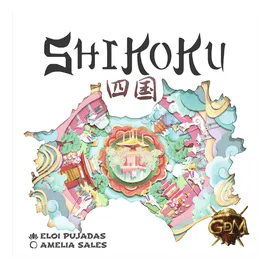
Shikoku box art
Rich game profile

Shikoku

Shikoku is the smallest of the four main islands of Japan and famous for its 88 Buddhist temples pilgrimage. It is said people have a year of misfortune and woes — at the age of 42 for men and 33 for women — so to be cured and avoid bad luck, pilgrims of those ages attend the tem...

Players

3-8

Time

30-40

Age

8+

Weight

1.75

Rating

6.61

Should this hit the table?

Quick read before the metadata.

Shikoku has a high level of direct confrontation and strategic depth in confrontation. Players need to frequently pay attention to and react to each other's strategies. However, there is less emphasis on cooperation in the game.

Teach 2.4

Teaching signal

Replay 4.1

High replayability

Interaction 3.6

Highly interactive

Scaling 4.0

Scales well

Strategy 4.5

Deep strategy

Control 3.5

More strategic control

Table feel

Shikoku has a high level of direct confrontation and strategic depth in confrontation. Players need to frequently pay attention to and react to each other's strategies. However, there is less emphasis on cooperation in the game.

Replay value

Shikoku offers a high level of variability with its gameboard, multiple paths to victory, and variable setups. The presence of expansions adds additional content and gameplay elements, enhancing replay value. The game provides deep strategic possibilities and room for improvement over time. Player interaction is moderate, and the game scales well with different numbers of players. While it may take some time to learn, the depth it offers makes it worth the effort. Overall, Shikoku has a strong replayability score of 8.1.

Luck profile

Shikoku has a moderate level of luck involved in the game. Random elements, such as card draws and dice rolls, have a notable but not exclusive impact on the game outcome. However, players have substantial ability to mitigate the effects of luck through strategic decisions and planning. The game outcome is primarily determined by player strategy and decisions, with luck playing a minor role. Overall, Shikoku strikes a good balance between luck and strategy, making it an engaging and enjoyable board game for players who enjoy both elements.

Overview

What ABG knows about this game

Shikoku is the smallest of the four main islands of Japan and famous for its 88 Buddhist temples pilgrimage. It is said people have a year of misfortune and woes — at the age of 42 for men and 33 for women — so to be cured and avoid bad luck, pilgrims of those ages attend the temple 23 called Yaku?ji and place of the Buddha of healing, Yakushi Nyorai. In every step, pilgrims leave a coin while singing the Yakushi mantra, which favors them with spiritual healing and prevents misfortune. In Shikoku, players play the role of pilgrims who are going up the 33 steps while singing mantras until they reach the pagoda. However, the "Middle Path" seeks moderation, not the extremes: To be the first one, or the last, is not welcome! The winners will be those who are second or next to last on the steps when a player reaches the top. The game is played in rounds, each of them with three phases: Following the turn order of the mantra line, each player plays one card from their hand placing it in the mantra area along with their pilgrim. When all players had played a card, pilgrims will be moved on the board. Players whose cards are second counting from the left and second counting from the right, don't go up. The other players go up as many steps (ICONO) as the card with their pilgrim indicates. Move the mantra card (and its pilgrim) with the lower value from the first position to the last one of the mantra line. This will determine the turn order of the next round. The last player in the mantra line gets a new mantra card and other players take one of the cards (in turn order) that have been played during the previous round to have three cards in their hands. After the moving phase of a round, if one or more players reach the pagoda (square 33), the game ends and the player, or players, who are second counting from the top and second counting from the bottom, win the game.


Media

Images and visual references

Images, galleries, and videos are grouped here so the page feels visual before every asset is fully hosted.

Editions

Versions and regional releases

Edition Year Language Publisher / Region
No editions imported yet.

Files and documents

Rules, aids, translations

No files imported yet.

Credits

People and publishers

Designers

1
Eloi Pujadas

Artists

1
Amelia Sales

Publishers

1
GDM Games

Linked items

Graph expansion queue

Related games and expansions help build a connected catalog around every title.

No linked items imported yet.