Overview
At a glance
Is this game right for my group?
ABG editorial scores on a 1–5 scale.
Harder to teach
High replayability
Highly interactive
Scales well
Deep strategy
How it plays
How does it play?
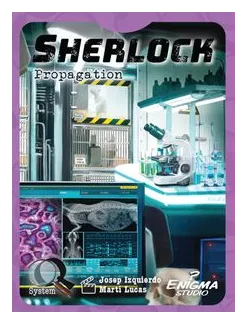
"The tactical unit has intervened in a hostage robbery, but the robbers have disappeared, what happened?, why? Follow the clues with your team of investigators to answer these questions and other questions.
Core mechanisms
Key systems that shape the decisions players make.
Communication Limits
Rules restrict what players may say, show, or reveal while cooperating.
Cooperative Game
Players coordinate their actions toward a shared objective and win or lose together.
Hand Management
Time and sequence a limited hand of cards to preserve future options.
Memory
Remember previously revealed information, positions, or sequences.
Read the full game description
"The tactical unit has intervened in a hostage robbery, but the robbers have disappeared, what happened?, why? Follow the clues with your team of investigators to answer these questions and other questions. Will you find the stolen jewels?" (from the back cover of the game) In each Q case, you try to solve a mystery case with 32 clues, with players revealing one clue at a time until all cards have been revealed or discarded. During your turn, each player must perform one of the following actions: A) Reveal information: Choose a card from your hand and place it on the table, so all players can read or see the entire information. We recomend you read out loud all shared info when you place it on the table. If you play a clue that happens to be irrelevant to the case, you lose points at the end of the game, but be careful! Some clues are vital to resolve the case. You can share and expose your theories at any moment and talk about the cards you have in your hand but you cannot show them to the other players and you may only read out loud the words written in bold or the text framed inside an image: At the end of the game, when all clue cards have been revealed or discarded, you must check carefully all the available information and prepare a theory of what happened, working all together. Then, open the questionnaire and answer all questions. During this phase of the game, you can speak freely about your discarded cards, or the information you remember of them. Each right answer will add two points.