Overview
At a glance
Is this game right for my group?
ABG editorial scores on a 1–5 scale.
Harder to teach
High replayability
Highly interactive
Scales well
Deep strategy
How it plays
How does it play?
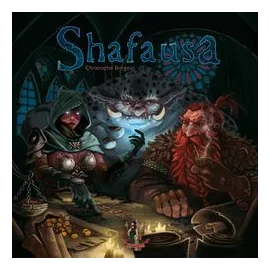
While digging on the slopes of Mount Ego, the Dwarves of Shafausa discovered a secret passage under the falls of the river Rain. From there they gained access into a subterranean world of obscure galleries and gigantic caves, full of immeasurable wealth.
Core mechanisms
Key systems that shape the decisions players make.
Read the full game description
While digging on the slopes of Mount Ego, the Dwarves of Shafausa discovered a secret passage under the falls of the river Rain. From there they gained access into a subterranean world of obscure galleries and gigantic caves, full of immeasurable wealth. The exploitation of this area rapidly assured the small tribe a lifestyle far superior to anything previously known in Helvetia. Their neighbours, the Vampires of Zugriga, immediately realised the fantastic commercial potential of these discoveries. Thanks to a clever stock exchange system, they implicated the other Helvetian tribes in their dealings, for the joy and well-being of all – or so they claimed. But wealth doesn't just fall from the sky, and it takes a good dose of know-how to be able to rival with the skill of a vampire... In Shafausa, each player represents a Helvetian tribe that has come to propose a new monetary system based on an exchange of resources. Each round players can make purchases (buildings, mines, warehouses) and exchange currency – and through these transactions influence the stock market for the prosperity of their region. Each player holds three Power cards with special actions, but can use only one during the game as the other two are then removed from play. The game lasts a number of rounds, with each round having seven phases: Extraction: Mines and certain buildings produce resources, with some buildings affecting how many resources something produces. Order of Play: Players bid for turn order; as players drop from the bidding, they place their marker in line relative to those who have previously dropped out, so whoever stays in the longest can get the position he wants. Buying and Constructing: In turn order, players buy at most one available building and construct two warehouses; alternatively, a player can pay to remove a building in order to make space for new buildings next round. Management: Players can build mines, add miners to their workforce, construct purchased buildings, buy and sell resources, and construct new towns. Administration: Players pay for buildings in reserve and check their resource limits; resource costs are adjusted based on past sales. Speculation: In turn order, players pay to adjust the prices of various resources, with each price marker being adjustable only once. End of Game Check: If one of a player's towns or warehouses has been filled, the game ends. Players then score points for their towns, mines, buildings, and so on, and the player with the most points wins. In addition to this "Geek" version of the rules, Shafausa includes a "Colonial" version in which players draft start-up tiles (instead of starting with pre-determined characters who come with specific buildings, funds, etc.) and a "Family" version that removes the "Speculation" phase, simplifies turn order, and otherwise makes the game less involved.