Overview
At a glance
Is this game right for my group?
ABG editorial scores on a 1–5 scale.
Harder to teach
High replayability
Low interaction
Scales well
Deep strategy
How it plays
How does it play?
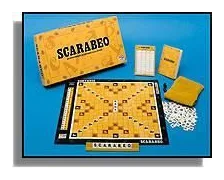
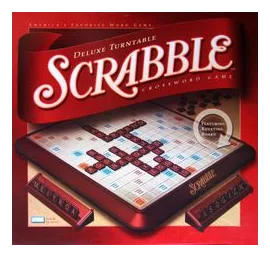
In this classic word game, players use their seven drawn letter-tiles to form words on the gameboard. Each word laid out earns points based on the commonality of the letters used, with certain board spaces giving bonuses.
Core mechanisms
Key systems that shape the decisions players make.
Hand Management
Time and sequence a limited hand of cards to preserve future options.
Tile Placement
Place tiles to build a shared or personal spatial arrangement.
End Game Bonuses
Earn additional points for meeting conditions evaluated when the game ends.
Square Grid
Use an orthogonal grid where position and adjacent spaces shape movement or placement.
Read the full game description
In this classic word game, players use their seven drawn letter-tiles to form words on the gameboard. Each word laid out earns points based on the commonality of the letters used, with certain board spaces giving bonuses. But a word can only be played if it uses at least one already-played tile or adds to an already-played word. This leads to slightly tactical play, as potential words are rejected because they would give an opponent too much access to the better bonus spaces. Skip-a-cross was licensed by Selchow & Righter and manufactured by Cadaco. Both games have identical rules but Skip-a-cross has tiles and racks made of cardboard instead of wood. The game was also published because not enough Scrabble games were manufactured to meet the demand.