Overview
At a glance
Is this game right for my group?
ABG editorial scores on a 1–5 scale.
Harder to teach
High replayability
Highly interactive
Scales well
Deep strategy
How it plays
How does it play?
Scoundrel is a single player rogue-like card game for use with a standard deck of playing cards. It was developed by Zach Gage and Kurt Bieg.
Core mechanisms
Key systems that shape the decisions players make.
Read the full game description
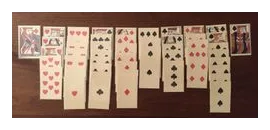
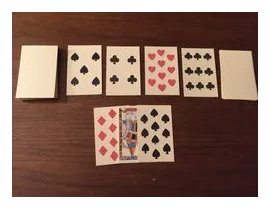
Scoundrel is a single player rogue-like card game for use with a standard deck of playing cards. It was developed by Zach Gage and Kurt Bieg. All Jokers, red face cards, and red aces are removed from the deck. The remaining cards serve as monsters (spades and clubs), weapons (diamonds), and health potions (hearts) valued from 2-14 (Two through Ace). The rooms of the dungeon are created by laying out cards in groups of four. Progress is made through the dungeon by playing three of the four dungeon cards. The fourth card serves as the foundation for a new room. Rooms can be reset in their entirety as many times as needed but never twice in a row. Weapons may be equipped to attack multiple monsters in descending order of their value with damage being dealt to the player for monster values in excess of the equipped weapon. The weapon breaks if it is used to attack a monster of equal or greater value than the previous monster. Attacking a monster without an equipped weapon depletes the players health for the full attack value of the monster. Health potions may be used to increase life points up to the maximum starting value of 20. Playing a second potion in succession nullifies the effect of the second potion. The game ends when life points reach zero or the player has progressed through the entire dungeon.