Overview
At a glance
Is this game right for my group?
ABG editorial scores on a 1–5 scale.
Harder to teach
High replayability
Highly interactive
Scales well
Deep strategy
How it plays
How does it play?
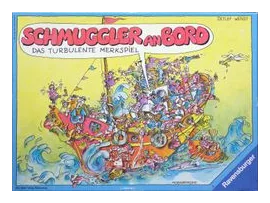
The game consists of a board, showing 30 different types of contraband goods, Gold, Cigarettes etc, each marked by a small picture and it's name. Each picture has a matching tile, which is placed face down over it.
Core mechanisms
Key systems that shape the decisions players make.
Read the full game description
The game consists of a board, showing 30 different types of contraband goods, Gold, Cigarettes etc, each marked by a small picture and it's name. Each picture has a matching tile, which is placed face down over it. Players each receive a number of chips and then take two or three (depending on the number of players), of the tiles for themselves, announcing which they have taken and then laying them face down in front of them. Now play begins. The players take turns to roll the die and then move around the board. At first they generally land on a space where the picture is covered by a tile. They take this tile for themselves, and lay it face down in front of them announcing as they do so which it was. As the tiles start to disappear though, players land on spaces where the tile is already missing. They then have to say who they think has that tile. If correct, they receive the tile. If the named player however thinks that he hasn't got the tile, then he may in turn name another player, and so on until either a named player accepts that he has the tile, or a player who has already been named is named again. Then it is sorted out who really did have the tile, working backwards through the chain of accusations until it is found. The owner, when unmasked, passes it to the first player correctly to have named him, and all players who have falsely accused someone must pay chips into the Bank, one chip for each false accusation made in that turn. Obviously, the passing on of tiles complicates matters terribly. It is simple enough to remember who took the tile in the first place, but by the time you have unraveled a chain of four or five false accusations, trying to remember who now has the tile is not so simple. The game goes on until either someone has collected a specified number of tiles, dependent on the number of players, or someone has no chips left. A player's tiles count two points each and every remaining chip one point, so it is quite possible to win without collecting many tiles, you merely have to avoid guessing falsely. (Jon Webley from GameCabinet)