Overview
At a glance
Is this game right for my group?
ABG editorial scores on a 1–5 scale.
Harder to teach
High replayability
Highly interactive
Scales well
Deep strategy
How it plays
How does it play?
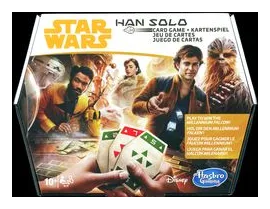
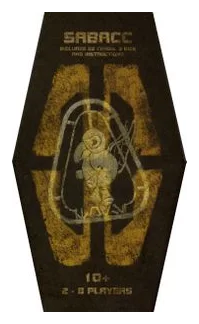
This format of Sabacc is sold exclusively at Star Wars: Galaxy's Edge themed areas of Disney theme parks.
Core mechanisms
Key systems that shape the decisions players make.
Read the full game description
This format of Sabacc is sold exclusively at Star Wars: Galaxy's Edge themed areas of Disney theme parks. This variation of Sabacc known in Star Wars lore as "Corellian Spike" is the version that was played in the legendary match between Han Solo and Lando Calrissian when Han gambled to win the Millennium Falcon. The deck includes 30 green positive cards with values of 1 through 10 (3 each), 30 red negative cards with values of -1 through -10 (3 each), and two black cards with values of 0. Each game is played in three rounds. Players receive two random cards at the beginning of the game and on each turn players can either gain an additional card (optionally discarding it to draw again), swap a card in the player's hand with the top card of the discard pile, stand (take no cards), or junk (fold). Players do this in turn, and at the end of each round the dice are rolled. If the symbols match then everyone's hand is discarded, players are dealt the same amount of new cards that they discarded, and play continues. At the end of three rounds, the player whose score is closest to 0 wins the game. There are several winning hands ranked in a hierarchy that can be assembled similar to poker. For example, Pure Sabacc (both zero cards and no other cards) or Full Sabacc (a hand of +10, +10, -10, -10, and 0).