Overview
At a glance
Is this game right for my group?
ABG editorial scores on a 1–5 scale.
Harder to teach
High replayability
Highly interactive
Scales well
Deep strategy
How it plays
How does it play?
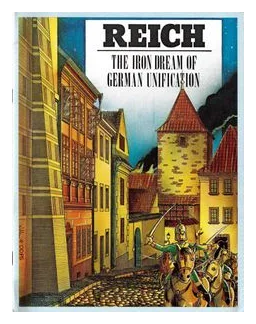
REICH portrays events in Germany between the Reformation and the unification engineered by Bismarck. Players are not bound to a pre-determined sequence of events; rather, major social forces are used to compose game elements.
Core mechanisms
Key systems that shape the decisions players make.
Area Majority
Compete to have the strongest presence in areas that award control or points.
Area Movement
Move pieces between connected regions rather than along individual spaces.
Open Drafting
Select cards or items from a shared face-up display.
Income
Receive recurring resources according to your position, assets, or development.
Player Elimination
Players can be removed from contention before the game ends.
Read the full game description
REICH portrays events in Germany between the Reformation and the unification engineered by Bismarck. Players are not bound to a pre-determined sequence of events; rather, major social forces are used to compose game elements. These include Marxist agitation, religious riots, peasant uprisings, revolts, Papal recognition, key ministers (like the Iron Chancellor himself), foreign intervention and aid, mobilizations and wars, etc., making up a game system both exciting and flavorful. Each player becomes a Prince attempting to unify a fragmented Germany by means of adroit diplomacy, cunning bargains, and sudden mobilizations and armed strikes. Each turn allows for card play and interaction, then demands that the phasing player choose one of four exclusive policies in the ensuing Action Phase. Player intelligence, elan, and flexibility determine a game's outcome, with little reference to luck. Opportunities for conclusive action are many, but must be seized decisively and courageously. Winning or losing, REICH is a memorable and enjoyable experience for every player.