Table feel
Quak has a high level of direct confrontation and strategic depth, with frequent interaction among players. However, it does not emphasize cooperation as much.
Players
2-4
Time
?-?
Age
4+
Weight
1
Rating
5.68
Teaching signal
High replayability
Highly interactive
Scales well
Deep strategy
Luck-sensitive
Quak has a high level of direct confrontation and strategic depth, with frequent interaction among players. However, it does not emphasize cooperation as much.
Quak has a high replayability score due to its high variability gameboard, impactful expansions, deep strategic possibilities, and good scalability. It offers a fresh experience each time it is played and allows players to improve their strategy over time. The game's adaptability to different player counts ensures a consistent and engaging experience. While it may take some time to learn, the depth it offers makes it worth the effort.
Quak has a moderate influence of luck. The game outcome is not solely determined by random elements, but they still have a notable impact. Players have some ability to mitigate the effects of randomness through strategic decisions, but luck plays a significant role. Overall, the game has a balanced mix of luck and strategy.
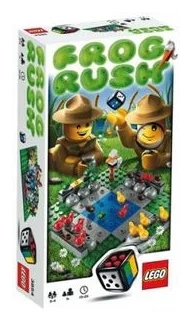
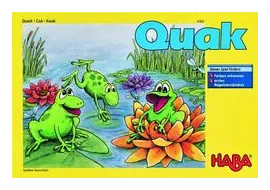
The frogs meet at the water lily pond on a nice summer evening to perform their daily croak-concert. When the frogs have croaked, they say good-bye and jump into the water. Whose frogs have disappeared first? The players try to get rid of the frogs first by rolling the dice. If you roll blue, you are lucky: put a frog in the water. If you have another color, you have to put the frog on a water flower and maybe, you can get the frog back. Short game that's fun for children and adults.

No media imported yet.
| Edition | Year | Language | Publisher / Region |
|---|---|---|---|
| No editions imported yet. | |||
No files imported yet.
No commerce mappings imported yet.
No linked items imported yet.