Overview
At a glance
Is this game right for my group?
ABG editorial scores on a 1–5 scale.
Harder to teach
High replayability
Highly interactive
Scales well
Deep strategy
How it plays
How does it play?
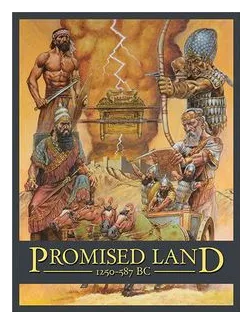
Promised Land: 1250-587 BC is a history of the Promised Land from Joshua through to the Babylonian captivity. Players compete in two teams, out of which just one individual will be crowned the winner.
Core mechanisms
Key systems that shape the decisions players make.
Read the full game description
Promised Land: 1250-587 BC is a history of the Promised Land from Joshua through to the Babylonian captivity. Players compete in two teams, out of which just one individual will be crowned the winner. Hebrew units are split between Northern and Southern kingdoms, but Hebrew players will have the opportunity to use both these factions through the game. Similarly there are eleven Heathen kingdoms for the Heathen players to use. Play happens at an individual, human level as well as at the movement of nations level. Each player has two Farmers, two Merchants and two Priests. A number of these can be placed after conquest into lands occupied by the kingdom just played. Farmers collect two bronze coins for plains and one for hills. Merchants collect two silver coins for ports and one for roads. Priests collect two gold coins for temples and one for cities. Players may have only one of their Patriarchs in any one land. Players may share occupation of a land, but only one type of Patriarch may be in each land. Players use the coins generated by their Patriarchs to buy artefacts that influence game play but can instead choose to secure objectives on the Kingdom track to highlight the development of the nation and score victory points of course! A variety of strategies are available, and players must make choices throughout the game in order to emerge victorious.