Overview
At a glance
Is this game right for my group?
ABG editorial scores on a 1–5 scale.
Harder to teach
High replayability
Highly interactive
Scales well
Deep strategy
How it plays
How does it play?
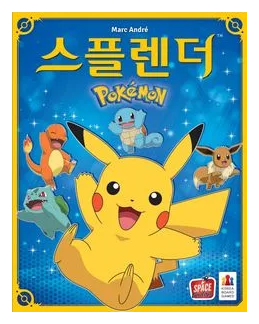
????: Pokémon plays much like the original Splendor game, but with special rules based on Pokémon. On your turn, you may (1) collect Pokéballs [which come in five colors), or (2) buy and build a card, or (3) reserve one card.
Core mechanisms
Key systems that shape the decisions players make.
Open Drafting
Select cards or items from a shared face-up display.
Contracts
Complete specific requirements to earn rewards, income, or victory points.
Set Collection
Gather related items that become more valuable when scored together.
Race
Compete to reach a destination, threshold, or objective before opponents.
Read the full game description
????: Pokémon plays much like the original Splendor game, but with special rules based on Pokémon. On your turn, you may (1) collect Pokéballs [which come in five colors), or (2) buy and build a card, or (3) reserve one card. If you collect Pokéballs, you take either three different colors of Pokéballs or two Pokéballs of the same color (as long as four are available). If you buy a card, you pay its price in Pokéballs, then add that card to your playing area. To reserve a card — in order to make sure you get it, or, why not, your opponents don't get it — you place it in front of you face down for later building; this costs you a round, but you also get purple (wild) Pokéball that you can use for any color. At the end of your turn, you can evolve one of the Pokémon in your collection if the next level of that Pokémon is in the display and you have the required Pokéballs. More points for you, and another card in your Pokédex... Legendary Pokémon require you to use a masterball — that is, a purple Pokéball — in order to catch them. When a player has 18 or more points in their collection, you complete the final round, then whoever has the most points wins.