Overview
At a glance
Is this game right for my group?
ABG editorial scores on a 1–5 scale.
Harder to teach
High replayability
Highly interactive
Scales well
Deep strategy
How it plays
How does it play?
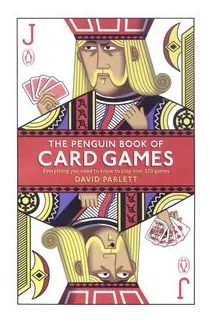
This book by David Parlett sets out rules for a very large selection of games. The book is laid out by 'families' of games and details main rules for each game plus a plethora of variations.
Core mechanisms
Key systems that shape the decisions players make.
Auction/Bidding
Bid against other players to determine who receives an item, action, or priority.
Betting and Bluffing
Risk resources on uncertain outcomes while disguising intentions or information.
Hand Management
Time and sequence a limited hand of cards to preserve future options.
Pattern Building
Place elements to create arrangements that satisfy scoring or action patterns.
Memory
Remember previously revealed information, positions, or sequences.
Read the full game description
This book by David Parlett sets out rules for a very large selection of games. The book is laid out by 'families' of games and details main rules for each game plus a plethora of variations. It also includes an introduction to card games and a glossary of terms. The latest edition (from 2008, cover pictured) also includes some original games by David Parlett and some tarot games. First published as "The Penguin Book Of Card Games", London, Allen Lane, 1979 Reprinted as "The The Penguin Book Of Card Games", ISBN 1-85051-221-3 hardcover, 478 pages, publisher: Treasure Press, reprinted edition 1987/88 Revised/expanded as "The Penguin Encyclopedia of Card Games", ISBN 978-0140280324 paperback, 688 pages, publisher: Penguin; 2nd edition 2000 As of August 2008 an updated edition exists of "The Penguin Book Of Card Games", ISBN 978-0141037875 paperback, 688 pages, publisher: Penguin; 2nd updated edition 2008