Overview
At a glance
Is this game right for my group?
ABG editorial scores on a 1–5 scale.
Harder to teach
High replayability
Highly interactive
Scales well
Deep strategy
How it plays
How does it play?
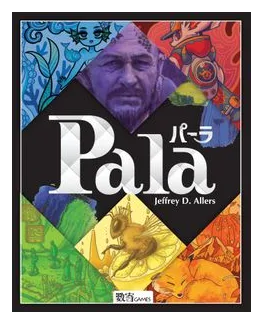
In the trick-taking card game Pala, players are art students who are learning to mix their pigments on the palette to get the right color for their canvases. The cards are the paint colors, and the palette is the table.
Core mechanisms
Key systems that shape the decisions players make.
Read the full game description
In the trick-taking card game Pala, players are art students who are learning to mix their pigments on the palette to get the right color for their canvases. The cards are the paint colors, and the palette is the table. By playing cards together (that is, mixing colors), you can effectively change the color of your cards as well as the trick itself. The published version of Pala includes two ways to play. Both variants use the same mechanisms for playing tricks, but have different bidding and score rules. Thus, once you wrap your head around the basics of the game, you can play two wildly different games with those core rules. In Impressionism, players collectively determine the value of different colors (suits) by discarding cards from their hands before the round begins. Points are bad, analogous to Hearts. In Pointillism, players bid with colored chips to indicate the colors they expect to win, but over-bidding risks losing all your points for the round. Points are good, analogous to Spades.