ABG All Board Games
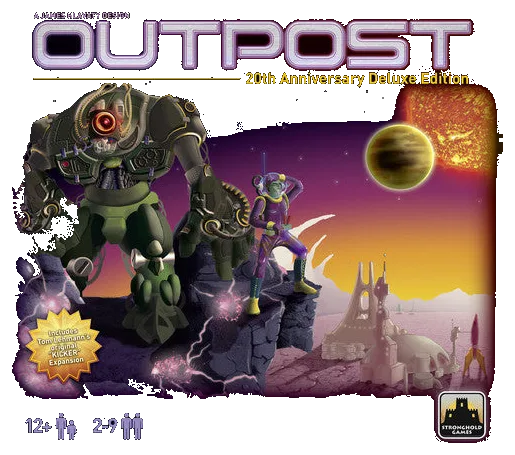
Outpost box art

Outpost

Players

2-9

Time

?-?

Age

12+

Weight

3.12

Rating

6.80

Fit

Teach 2.6

Teaching signal

Replay 3.9

High replayability

Interaction 3.6

Highly interactive

Scaling 4.0

Scales well

Strategy 4.5

Deep strategy

Control 3.2

Luck-sensitive

Table feel

Outpost has a high level of direct confrontation and strategic depth in confrontation. Players need to frequently pay attention to and react to each other's strategies and turns. However, there is less emphasis on cooperation in the game.

Replay value

Outpost has a high replayability score due to its high variability gameboard, impactful expansions, deep strategic possibilities, and good scalability. It offers a fresh experience each time it is played and allows players to improve their strategies over time. The game adapts well to different player counts without compromising its appeal or balance. While it may take some time to learn, it offers a rewarding and engaging gameplay experience.

Luck profile

Outpost has a moderate influence of luck. Random elements have a notable but not exclusive impact on the game outcome. Players have substantial ability to mitigate randomness through strategic decisions and planning. The game outcome is primarily determined by player strategy and decisions, with luck playing a minor role.

Overview

Players compete to build the best outpost. They must build and staff factories to produce resources, which are then used to build more factories, and purchase any of 13 outpost improvements that give different advantages (ranging from production technologies, resource storage, and increased population maximums to resource producing stations). Improvements are purchased through auctions, and each player may win several per round. There are 3 phases in the game, and with each phase after the first, a new set of improvements is available to purchase. Each staffed factory and improvement is worth a certain number of victory points (ranging from 1 pt for an ore factory to 20 points for a moon base), and the first player to reach 75 points wins. This game's mechanisms were later reused in The Scepter of Zavandor and, to a lesser extent, in Phoenicia.

Editions

Edition Year Language Publisher / Region
No editions imported yet.

Files

No files imported yet.

Credits

Designers

2
James Hlavaty Timothy Moore

Artists

3
Karim Chakroun Michael D. Moore Damian Isherwood

Publishers

2
Stronghold Games TimJim Games