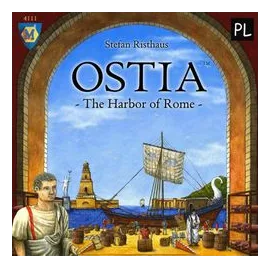
Overview
At a glance
Is this game right for my group?
ABG editorial scores on a 1–5 scale.
Harder to teach
High replayability
Highly interactive
Scales well
Deep strategy
How it plays
How does it play?
Ostia is an economic game of trading goods and donating them to the senate of Rome. You have to decide, whether you want to earn money for your goods or whether you want to donate some of them to the senate.
Core mechanisms
Key systems that shape the decisions players make.
Read the full game description
Ostia is an economic game of trading goods and donating them to the senate of Rome. You have to decide, whether you want to earn money for your goods or whether you want to donate some of them to the senate. The senate grants victory points for the most needed goods, but no money. Therefore you have to put some goods to the market, hoping that they are rarely sold there to earn enough money for the next trading phase. The ranking of goods mostly needed changes each round and you can see the ranking for the next round. Accordingly you may decide to keep some of the goods for next round, when they are more valuable to the senate. But you can keep only one card of goods per storehouse and storehouses are expensive.