Table feel
The game has a moderate level of direct confrontation and strategic depth. Players need to frequently pay attention to each other's actions. However, there is less emphasis on cooperation.
Players
2
Time
?-?
Age
?+
Weight
1.45
Rating
5.36
Teaching signal
High replayability
Highly interactive
Scales well
Deep strategy
Luck-sensitive
The game has a moderate level of direct confrontation and strategic depth. Players need to frequently pay attention to each other's actions. However, there is less emphasis on cooperation.
Nothing So Well Lost: The Siege of Rhodes 1522 has a high replayability score due to its variability, strategic depth, and scalability. The game offers different experiences each time it is played, with multiple paths to victory and variable setups. The presence of expansions adds new content and gameplay elements, enhancing the replay value. The game allows players to improve their strategy over time, discovering new tactics and strategies. The player interaction score is moderate, and the game scales well with different numbers of players. Although it may take some time to learn, the depth it offers makes it worth the effort.
The final luck score for Nothing So Well Lost: The Siege of Rhodes 1522 is 6. The game has a balanced mix of luck and strategy, with random elements having a notable but not exclusive impact on the game outcome. Players have substantial ability to mitigate randomness through strategic decisions and planning. Overall, luck plays a significant role in the game, but player strategy and decisions also have a considerable influence on the outcome.
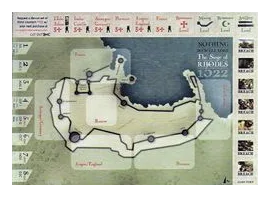
This is the second game in the TPS line of the Pocket Battle Games series from LPS, Inc. It covers the 1522 attempt by the Ottoman empire to take the city from the Knights Hospitaler. It is printed on a single postcard-sized piece of cardstock with game map on front and rules on the back. Counters need to be cut from around the edge of the card. Die-cut counters are available from ATO with any purchase at no additional charge. The Ottoman side attempts to reduce the Hospitaler resistance by bombardment, mining and assault, while the Hospitaler side tries to reduce the Ottoman artillary and resistance by bombardment, counter-mining and sallies. These actions are taken by units activated by random card draws and results are resolved with a D6 roll.
No media imported yet.
| Edition | Year | Language | Publisher / Region |
|---|---|---|---|
| No editions imported yet. | |||
No files imported yet.
No commerce mappings imported yet.
No linked items imported yet.