Overview
At a glance
Is this game right for my group?
ABG editorial scores on a 1–5 scale.
Harder to teach
High replayability
Highly interactive
Scales well
Deep strategy
How it plays
How does it play?
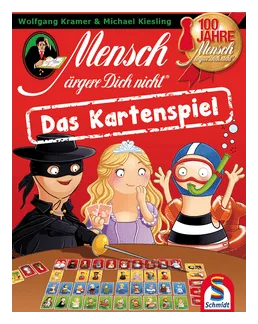
With Mensch ärgere Dich nicht: Das Kartenspiel, designers Kramer and Kiesling have tried to recreate the board game "Frustration (aka Trouble)", in which your pawns constantly being sent back to start, using only cards.
Core mechanisms
Key systems that shape the decisions players make.
Read the full game description
With Mensch ärgere Dich nicht: Das Kartenspiel, designers Kramer and Kiesling have tried to recreate the board game "Frustration (aka Trouble)", in which your pawns constantly being sent back to start, using only cards. To set up the game, lay out the number cards (1-40) in rows, using two copies of the 1-10 cards if playing with 3-4 players. Shuffle the dice cards, then deal two to each player. On a turn, a player plays one die card (which shows values from 1 to 6), then either starts a new row of cards or adds to an existing row. To start a new row, take the card showing this number from the display and place it in front of you; when starting a row, you can choose to play both die cards instead of only one. To add to a row, add the die value played to the number on the top card of one of your rows, then take this card from the display. If another player has used a desired card in one of her rows, steal it from her row and use it for yourself. You can have at most three rows in progress. At the end of your turn draw back up to two die cards. When you play a die card to place the 40 card on a row, you then score the row, earning one point for each card in the row plus one point for each star on cards in that row. Record this score on paper, then return these cards to the display. The game ends when a player scores 30, 35, or 40 points, with this total being dependent on the number of players: 2, 3, or 4.