Overview
At a glance
Is this game right for my group?
ABG editorial scores on a 1–5 scale.
Harder to teach
High replayability
Highly interactive
Scales well
Deep strategy
How it plays
How does it play?
Linked game discovered from BGG. Full scrape pending.
Core mechanisms
Key systems that shape the decisions players make.
Area Majority
Compete to have the strongest presence in areas that award control or points.
Closed Drafting
Choose from hidden cards or items before passing or revealing the remainder.
Hand Management
Time and sequence a limited hand of cards to preserve future options.
Simultaneous Action Selection
Choose actions secretly or concurrently before revealing them together.
Modular Board
Build the play area from interchangeable sections that vary between games.
Variable Set-up
Starting conditions, resources, or layouts change between plays.
Read the full game description
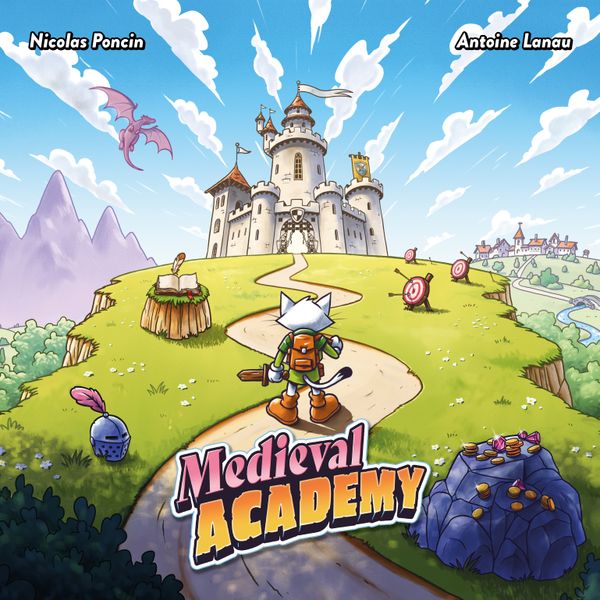
"Squires, welcome to Medieval Academy, the place where you'll be trained to become a knight. You'll have to master the arts of Jousts and Tournaments, complete dangerous Quests, and polish your Education. You'll also have to serve the king, and show that you have a sense of Charity and Gallantry. Only one of you will be knighted by King Arthur, so it's time to show what you’re capable of." —Father Advevan Nicolus Emilius, chairman of the Medieval Academy. In Medieval Academy, a "family+" game, each player takes the role of a squire who wants to outdo the others in the different training categories to score Chivalry Points. To achieve this goal, during the six turns of the game, the players must wisely draft the cards that are the most useful to them and play them at the right time to move their discs up the training tracks. At the end of turn VI, the squire who has the most Chivalry Points wins the game and is knighted by King Arthur!