ABG All Board Games
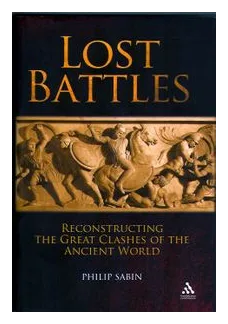
Lost Battles: Reconstructing The Great Clashes Of The Ancient World box art

Lost Battles: Reconstructing The Great Clashes Of The Ancient World

Players

2

Time

?-?

Age

?+

Weight

3.44

Rating

7.83

Fit

Teach 2.3

Teaching signal

Replay 4.0

High replayability

Interaction 3.7

Highly interactive

Scaling 4.0

Scales well

Strategy 4.5

Deep strategy

Control 3.5

More strategic control

Table feel

The game has a high level of direct confrontation and strategic depth in confrontation. Players need to frequently pay attention to and react to others' strategies and turns. However, there is less emphasis on cooperation as players primarily compete against each other.

Replay value

Lost Battles: Reconstructing the Great Clashes of the Ancient World has a high replayability score due to its high variability gameboard, availability of expansions, deep strategic possibilities, and good scalability. The game offers different experiences each time it is played, with multiple paths to victory and variable setups. The expansions add new content and gameplay elements, enhancing the replay value. There is ample room for players to improve their strategy over time, discovering new tactics and strategies. The game adapts well to different player counts without compromising its appeal or balance. While it may not be the easiest game to learn, it offers a rewarding depth of gameplay. Overall, Lost Battles: Reconstructing the Great Clashes of the Ancient World provides a fresh and engaging experience with a high replayability factor.

Luck profile

The final luck score for Lost Battles: Reconstructing the Great Clashes of the Ancient World is 7. This indicates a game that has a balanced mix of luck and strategy. Random elements have a notable but not exclusive impact on the game outcome, and players have substantial ability to mitigate randomness through strategic decisions and planning. The game outcome is primarily determined by player strategy and decisions, with luck playing a minor role.

Overview

Philip Sabin is a Professor of Strategic Studies at King's College in London. One of the tools that he uses for exploring ancient battles is simulation. In this 298 page book, Sabin guides us through the creation of a system for simulating pitched battles in the ancient period, and then applies the system to 35 historical battles. Scenario setups are shown on color plates. The rules for the system are approximately 16 pages long, and can be used with either miniatures or counters. (Counters are available for free download from the author's Web site.) Armies have roughly 20 units, which are graded into Veteran, Average, and Levy training levels. Battlefields are divided into a rectangular grid 5 areas wide by 4 areas deep. Each turn, players throw a single die to determine command points, which allows units to move and fight between areas. Veteran units require few points to command. Unit states are very simple: fresh, spent, and shattered (eliminated). The book contains extensive references to both primary and secondary sources. Fifth Column Games version is found at Lost Battles.
Media

No media imported yet.

Editions

Edition Year Language Publisher / Region
No editions imported yet.

Files

No files imported yet.

Commerce

No commerce mappings imported yet.

Credits

Designers

1
Philip Sabin

Publishers

1
Hambledon Continuum