Overview
At a glance
Is this game right for my group?
ABG editorial scores on a 1–5 scale.
Harder to teach
High replayability
Highly interactive
Scales well
Deep strategy
How it plays
How does it play?
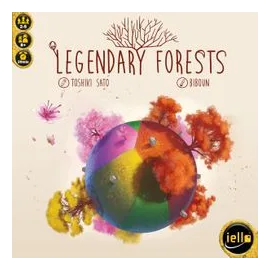
8bit MockUp (8?????????) (later republished as Legendary Forests) is a multiplayer solitaire game akin to Take it Easy! or Karuba.
Core mechanisms
Key systems that shape the decisions players make.
Read the full game description
8bit MockUp (8?????????) (later republished as Legendary Forests) is a multiplayer solitaire game akin to Take it Easy! or Karuba. Each player has an identical set of tiles and plays the same tile at the same time to their own tableau, but where each player places each tile may differ. In more detail, each player creates their own world by connecting the landscapes on their tiles. Each player starts the game with the same starting tile in play. One player, the "Leader", shuffles their tiles face down, then removes five tiles from play without looking at them. On a turn, the Leader reveals the next tile, calls out the number on it, then everyone places that same tile somewhere in their landscape, with the adjacent edges of each pair of tiles needing to match. When the Leader draws a tile with a red number, everyone places their piece, then starting with the player who holds the God piece (initially the Leader), everyone draws a monument tile from the center of the playing area and places it on an area in their landscape. Monuments come in three colors (while the landscapes have areas in four colors), and you use only two monuments of a color for each player in the game. After placing monuments, pass the God piece clockwise to the next player. The game ends after everyone has placed their twenty tiles, then players score points based on the areas where they have monuments. Each non-purple edge of a tile has a half-circle on it; when two such edges are placed together, the owner of those tiles has created a "cookie" in that area. To score, you look at each area where you have a monument. If you have no half-circles in this area — that is, the area is completely enclosed — then you score 2 points for each cookie in that area. If you have any unconnected half-circles in this area, you instead score 1 point per cookie. Whoever has the most points wins! The first edition of 8bit MockUp included tiles for 2-4 players, while the second edition included tiles for 2-5 players. You can have any number of players compete in the same game as long as you have enough sets. ••• ??????????????????? ??????????????????????????????????? ?????????????????????????? ????????????????????????20?????????????? ?????????????????????????????? ???????????????????????? ????????????????????????????