Overview
At a glance
Is this game right for my group?
ABG editorial scores on a 1–5 scale.
Harder to teach
High replayability
Highly interactive
Scales well
Deep strategy
How it plays
How does it play?
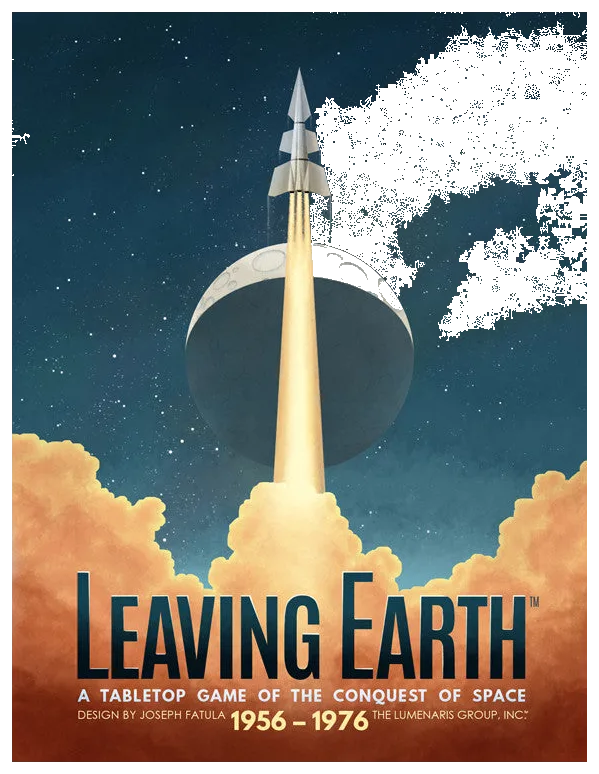
The year is 1956. Mankind stands at the dawn of a new age, the Space Age, when the flying bombs of yesteryear will become the rocket ships of tomorrow.
Core mechanisms
Key systems that shape the decisions players make.
Pick Up and Deliver
Collect goods at one location and transport them to another for rewards.
Push Your Luck
Choose whether to secure current gains or risk them for a larger reward.
Point-to-Point Movement
Move along explicit connections between named locations or nodes.
Resource to Move
Spend resources to determine or increase movement.
Simulation
Model a real or imagined system through detailed cause-and-effect rules.
Read the full game description
The year is 1956. Mankind stands at the dawn of a new age, the Space Age, when the flying bombs of yesteryear will become the rocket ships of tomorrow. As the director of a national space program, your country is depending on you for success in this great contest. You may be the first to create an artificial satellite, send a probe to another planet, or even put a man on the moon. Leaving Earth is a game about planning and about managing risk. With even a single grand journey into outer space, you might claim victory in the game. Consequently, it is your job to plan each journey carefully, finding the cheapest, quickest, and safest ways to reach your objective—but do not spend too long preparing, or another nation might reach its goal before you. On your turn, you will be conducting research, building spacecraft, and directing journeys into outer space. To conduct research, you buy an advancement that begins with certain flaws, then you test the advancement to find and eliminate those flaws. To build a spacecraft, you purchase components and assemble them into a whole. To travel to outer space, you expend rockets to maneuver from one location to another.