Overview
At a glance
Is this game right for my group?
ABG editorial scores on a 1–5 scale.
Harder to teach
High replayability
Highly interactive
Scales well
Deep strategy
How it plays
How does it play?
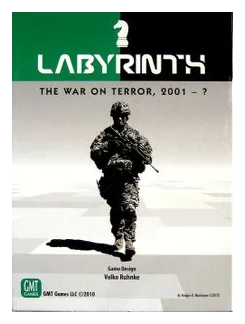
2001: The “American Century” had closed with a single Cold War superpower standing and a pause in conflict that some at the time dubbed “The End of History”. It wasn’t.
Core mechanisms
Key systems that shape the decisions players make.
Action Points
Spend a limited allowance of points across several possible actions each turn.
Area Majority
Compete to have the strongest presence in areas that award control or points.
Action/Event
Cards can provide player actions, trigger events, or force a choice between them.
Campaign Card Play
Play cards to command conflicts and carry consequences through a campaign.
Command Cards
Use cards to issue orders and determine which units or actions can activate.
Read the full game description
2001: The “American Century” had closed with a single Cold War superpower standing and a pause in conflict that some at the time dubbed “The End of History”. It wasn’t. In the Middle East and South Asia, an Islamic revival was underway. Resentments bred in part of US support for the regions’ anti-Soviet tyrannies soon erupted into a new struggle against the West. Wealthy Saudi fanatic Usama bin Ladin issued a declaration of holy war against America in 1996 and then fired the first shots with spectacular terrorist attacks on US targets in East Africa in 1998 and the Arab Peninsula in 2000. Bin Ladin’s al-Qaeda organization plotted securely under the protection of the Taliban, a fundamentalist movement in Afghanistan born of the anti-Soviet “Bear Trap” of the 1980s. By 2001, al-Qaeda had set in motion even more devastating strikes — this time within the US Homeland — that Bin Ladin hoped would light off a global Muslim uprising. Uprising or not, the Western response to those September 11th attacks would reshape international affairs from London to Jakarta and from Moscow to Dar es Salaam. Labyrinth takes 1 or 2 players inside the Islamist jihad and the global war on terror. With broad scope, ease of play, and a never-ending variety of event combinations similar to GMT’s highly popular Twilight Struggle, Labyrinth portrays not only the US efforts to counter extremists’ use of terrorist tactics but the wider ideological struggle — guerrilla warfare, regime change, democratization, and much more. --description from publisher