Overview
At a glance
Is this game right for my group?
ABG editorial scores on a 1–5 scale.
Harder to teach
High replayability
Highly interactive
Scales well
Deep strategy
How it plays
How does it play?
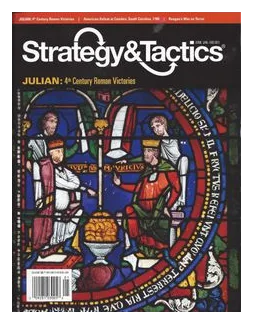
"Julian", designed by Joseph Miranda, is a wargame of intermediate complexity simulating the situation across the Roman Empire in the 4th century AD. There are two opposing players: Roman and Barbarian.
Core mechanisms
Key systems that shape the decisions players make.
Read the full game description
"Julian", designed by Joseph Miranda, is a wargame of intermediate complexity simulating the situation across the Roman Empire in the 4th century AD. There are two opposing players: Roman and Barbarian. The Roman player represents the high command of a centralized empire; the Barbarian player represents the various chaotic forces working to destroy that empire. The Roman objective is to reconsolidate the threatened empire and secure its frontier regions to prevent further barbarian invasion. The Barbarian objective is to grab as much Roman territory as possible. The game system is based on the one originally presented in our earlier S&T games: Series: They Died With Their Boots On (Decision Games). The Barbarian side is divided into “forces,” each representing an independent people or coalition of tribes, such as the Goths. The Persians and Armenians, though commanded in the game by the barbarian player, are considered “civilized” forces (along with all Roman and rebel units). Each turn represents one year. Each hexagon on the map represents 100 miles (162 km) from side to opposite side. Each unit represents 10,000 to 30,000 troops and camp followers, etc. Special rules cover such things as: usurpation, stratagems, random events, reinforcements, pursuit, taxation, Caesar and Augustus units, naval movement, fortresses and bases, fog of war, the Huns, political crises, tribal homelands, militia, field armies, supply trains, pursuit combat, amphibious operations, pillage, civic works, and more.