Overview
At a glance
Is this game right for my group?
ABG editorial scores on a 1–5 scale.
Harder to teach
High replayability
Highly interactive
Scales well
Deep strategy
How it plays
How does it play?
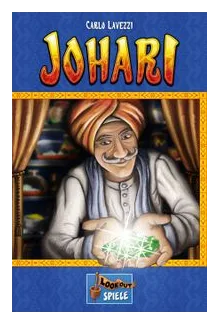
Johari is a world famous jewelry market in Jaipur, so naturally in the game Johari you and your fellow players will try to buy and sell gems in order to come out tops on the market. The game lasts ten days, with players taking three actions each day.
Core mechanisms
Key systems that shape the decisions players make.
Set Collection
Gather related items that become more valuable when scored together.
Simultaneous Action Selection
Choose actions secretly or concurrently before revealing them together.
Delayed Purchase
Commit to a purchase before receiving the item or paying its full cost.
End Game Bonuses
Earn additional points for meeting conditions evaluated when the game ends.
Turn Order: Stat-Based
Determine or change the order in which players take their turns.
Read the full game description
Johari is a world famous jewelry market in Jaipur, so naturally in the game Johari you and your fellow players will try to buy and sell gems in order to come out tops on the market. The game lasts ten days, with players taking three actions each day. At the start of each day, the market is seeded with new gems, gold and prestige cards, with the stores holding only items of the same type and bazaar booths holding whatever comes to them. A new noble visits the market each day, offering a special power to whoever wants to pay for the privilege, with his price dropping each day. Each player chooses one of the seven action cards in hand, then they resolve them in order of who has the most gold. They then do this twice more, getting discounts now for the cost of taking certain actions. The action cards let you earn gold, take all the cards from one store or bazaar booth, hire a noble, swap gems, protect yourself for inspections in case you have fake gems, copy your previously played action, or (most important of all) sell gems. In addition to points from nobles and prestige cards, most of your score will come from gems that you sell — but you need to sell the right gems in the right way. When selling to a jeweler, you need to sell four different types of gems (or three types and gold), but you score only for one of the gem cards sold; when selling to a collector, you sell gems of only one type, but you have to hold the most gems of that type and you score only the difference between what you hold and what the player with the secondmost gems of this type holds. Status matters in the collector community! Whoever has the most prestige points after ten days wins.