Overview
At a glance
Is this game right for my group?
ABG editorial scores on a 1–5 scale.
Harder to teach
High replayability
Highly interactive
Scales well
Deep strategy
How it plays
How does it play?
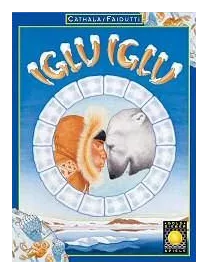
At first the board is a field of ice with four squares in the middle cracked open to reveal a few fish.
Core mechanisms
Key systems that shape the decisions players make.
Action Points
Spend a limited allowance of points across several possible actions each turn.
Area Majority
Compete to have the strongest presence in areas that award control or points.
Tile Placement
Place tiles to build a shared or personal spatial arrangement.
Modular Board
Build the play area from interchangeable sections that vary between games.
Read the full game description
At first the board is a field of ice with four squares in the middle cracked open to reveal a few fish. You start your turn by picking up one more square of ice next to some water already open; this square will turn out to have more fish, or a polar bear, or to be hard ice instead of water and have a fox on it -- or instead it may confer a special power such as melting an extra square of ice or pushing a row of ice squares one space. Meanwhile the players' Inuit meeples approach from the edge of the board to hunt the fish and the other animals to score points and to build igloos for territorial reasons. The game ends when there's no more ice to be melted (all the squares next to open water have an Inuk or an igloo on them), prompting a final scoring based on which players have control of the remaining islands. Even in the "gamers' version" (Inuit cannot enter a square with an opposing igloo, scoring is a little different at the end) noted by the authors, the tiles you draw determine, to a large extent, your luck in the game. But your cleverness in scrambling to make the best of opportunities keeps Iglu Iglu interesting.