Overview
At a glance
Is this game right for my group?
ABG editorial scores on a 1–5 scale.
Harder to teach
High replayability
Highly interactive
Scales well
Deep strategy
How it plays
How does it play?
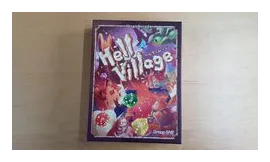
The King of Hell has passed away and players in Hell village competes to score highest evil point to become the Demon King.
Core mechanisms
Key systems that shape the decisions players make.
Hand Management
Time and sequence a limited hand of cards to preserve future options.
Action Queue
Place actions into an ordered queue that resolves now or on later turns.
Dice Rolling
Roll dice to introduce uncertainty into actions, production, movement, or resolution.
Tile Placement
Place tiles to build a shared or personal spatial arrangement.
Worker Placement
Commit limited workers to action spaces before opponents occupy them.
Read the full game description
The King of Hell has passed away and players in Hell village competes to score highest evil point to become the Demon King. Similar to the previous game "Demon Worker" released by the same author, Hell village added a few more elements and mechanics to the game such as dice rolling, manipulation of dice results, village building and resource income, etc. The cards for worker placement are transformed into a main board with a score board. Also, the artwork is remade with more detailed design. The game is comprised of 7 rounds. In each round, players have to roll 3 dice to decide the player order and then take turns to place their dice one by one to any available function on the main board. The dice result also decides the number of resources that could be taken from the supply. A player can always kick out the other player's dice on the main board if their die is smaller than others and all spaces on that function are occupied. Each round has an event card that requires players to pay certain resources at the end of the round. Some worker placement areas allow for cards to be played for ongoing effects or cards may be played into a city structure (ala tile-placement) for more bonuses. The game also provides variations that make functions on the main board evolve during the middle to late game.