Overview
At a glance
Is this game right for my group?
ABG editorial scores on a 1–5 scale.
Harder to teach
High replayability
Highly interactive
Scales well
Deep strategy
How it plays
How does it play?
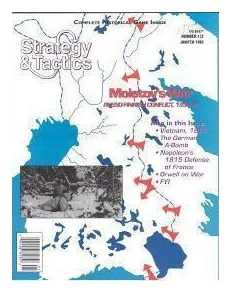
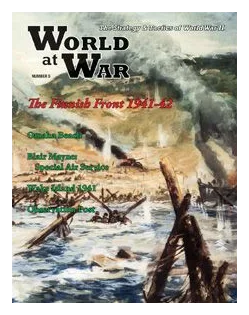
The Finnish Front, 1941-42 (TFF), is the fifth game to be published in the “They Died With Their Boots On” series (S&T#236 & S&T#242).
Core mechanisms
Key systems that shape the decisions players make.
Read the full game description
The Finnish Front, 1941-42 (TFF), is the fifth game to be published in the “They Died With Their Boots On” series (S&T#236 & S&T#242). TFF’s “Boots” system simulates what might otherwise appear to be hopeless campaigns, in this case the first stage of what the Finns call the “Continuation War.” It was fought between Axis (Finnish and German) forces and the Soviets during 1941-42, much of it north of the Arctic Circle. During that war the Finns recaptured the territory they’d lost to the Soviets in the Winter War of 1939-40. They failed to take Murmansk, however, which would have seriously hindered Allied Lend-Lease shipments to the Soviet Union. TFF is played in sequential “game turns,” each of which is composed of interactive “phases” and “sub-phases.” During each Operations Phase, the players alternate picking markers from the command pool; each such pick thereby indicating which sub-command will be “activated” for movement and combat at that time. The High Command marker causes the Orders From The High Command Table to be checked. The player controlling a selected sub-command receives reinforcements for it, if any are available that game turn, and then moves and conducts combat with the units of that sub-command. The armies in TFF are divided into “sub-commands,” each of which operates as a semi-autonomous force within its overall army. Sub-commands are defined by abbreviations and colored stripes on the unit-counters. Pulling certain markers will allow a player to conduct operations simultaneously with more than one sub-command. Published in World at War magazine #5, 2009. Game Scale: Game Turn: 1 month Hex: 23 miles / 37 kilometers Units: Battalion to Division Game Inventory: One 22 x 34" full color mapsheet One dual-side printed countersheet (228 5/8" counters) One 24-page Zhukov’s War rulebook Solitaire Playability: Medium Complexity Level: Medium Players: 2 or more Playing Time: 2-6