Overview
At a glance
Is this game right for my group?
ABG editorial scores on a 1–5 scale.
Harder to teach
High replayability
Highly interactive
Scales well
Deep strategy
How it plays
How does it play?
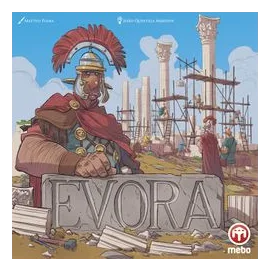
The Roman temple of Évora was probably built in honor of Emperor Augustus. It was built in the 1st century AD in the main square (forum) of Évora - then called Liberalitas Julia.
Core mechanisms
Key systems that shape the decisions players make.
Area Majority
Compete to have the strongest presence in areas that award control or points.
Hand Management
Time and sequence a limited hand of cards to preserve future options.
Open Drafting
Select cards or items from a shared face-up display.
Rondel
Move around a circular action track that limits which actions are currently reachable.
End Game Bonuses
Earn additional points for meeting conditions evaluated when the game ends.
Read the full game description
The Roman temple of Évora was probably built in honor of Emperor Augustus. It was built in the 1st century AD in the main square (forum) of Évora - then called Liberalitas Julia. In this game players will play the role of builders of the Roman Empire and the action takes place in Évora in the 1st century AD. The objective: Build the 14 columns that still exist today on the site. Players move their workers around the rondel to define the action they intend to perform: Build (stones and capitals), improve the columns already built (points multiplier) and request the influence of important characters (cards). These characters are: The Emperor who will value the columns at the end of the game. The governor who will inspect the columns and during the game will compensate the player. The centurion who maintain order in the construction site and will offer greater mobility to the player. The architect who helps in the construction process making it much more effective and profitable. The player who obtains the most prestige points, based on the stones placed in each column and also on bonuses, wins the game. —description from publisher O templo romano de Évora foi provavelmente construído em homenagem ao imperador Augusto, que era venerado como um deus, durante e após seu reinado. Foi construído no século I d.C. na praça principal (fórum) de Évora - então chamada de Liberalitas Julia.Neste jogo os jogadores desempenharão o papel de construtores do Império Romano e a ação ocorre em Évora no século I d.C. O objectivo: Construir as 14 colunas que ainda existem nos dias de hoje no local. Este jogo tem a sua mecânica principal baseada num rondel e os jogadores movimentam os seus trabalhadores para definirem a ação que pretendem executar: Construir (pedras e capiteis), aperfeiçoar as colunas já construídas (multiplicador de pontos) e solicitar a influência de personagens importantes (cartas). Estas personagens são: O Imperador que valorizará as construções no final do jogo. O governador que inspecionará as construções e durante o jogo compensará o jogador. O centurião que mantêm a ordem no estaleiro e oferecerá maior mobilidade ao jogador. O arquiteto que ajuda no processo de construção tornando-o muito mais eficaz e rentável. Vence o jogador que obtiver mais pontos de prestigio baseado nas pedras colocadas em cada coluna e também nalgumas bonificações.