Overview
At a glance
Is this game right for my group?
ABG editorial scores on a 1–5 scale.
Harder to teach
High replayability
Highly interactive
Scales well
Deep strategy
How it plays
How does it play?
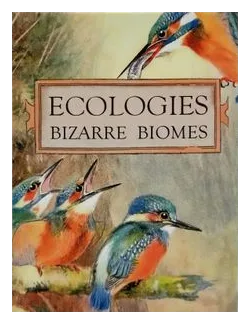
Ecologies: Bizarre Biomes is the second game in the series. It is playable as a stand alone game or used in combination with the original Ecologies card game.
Core mechanisms
Key systems that shape the decisions players make.
Set Collection
Gather related items that become more valuable when scored together.
Hand Management
Time and sequence a limited hand of cards to preserve future options.
Negotiation
Make proposals, promises, or deals directly with other players.
Hidden Victory Points
Some scores remain concealed until a reveal or the end of the game.
Simulation
Model a real or imagined system through detailed cause-and-effect rules.
Read the full game description
Ecologies: Bizarre Biomes is the second game in the series. It is playable as a stand alone game or used in combination with the original Ecologies card game. Players build and maintain food webs in diverse environments. Healthy ecologies reward you with bonus powers and perks. Watch out though, as others may decide it’s easier to disturb and degrade your ecosystem than nurture their own. Designed by a biology teacher, the game includes 77 unique organisms, 7 biomes, and beautiful vintage Victorian art. (108 cards total) Players: 1-6 Ages: 12+ (8+ with simplified rules) Time: 60-90 minutes Game Modes: Standard, Simplified, Single Player Cards are arranged with plants on the bottom and predators on top. Players negotiate trades and use biotic and abiotic factor cards to affect their webs and the webs of players around them. It is a race to get to 12 victory points, with players using different strategies such as focusing on one biome, going for perks and bonuses, or disrupting other ecologies. Gameplay is rooted in authentic science, as it is used in the classroom to teach real concepts to biology students. While it is scientific enough for the classroom, it is also strategic enough for any game night. The points system is based on ecological trophic levels. The producers (plants) are worth less and as you make your way up the pyramid organisms are worth more, as it takes a lot of energy to sustain them. In real life only roughly 10% of the energy makes it from one level to the next, meaning you have to have acres of land and hundreds of animals just to sustain one apex predator. This game is a sequel AND an expansion. When using the game as an expansion, you can customize the deck to include cards from both games, including cards you love and excluding ones you don’t. Some players love aggressive “take that” mechanics, while others find them stressful. Some players love particular healthy ecology bonuses, while others feel they are overpowered. With multiple decks, you can create a customized experience to fit your group. If you’d like to maintain the same game length and feel, we recommend choosing 10 factor cards and 7 different biomes. Note: more cards = a longer game —description from the designer