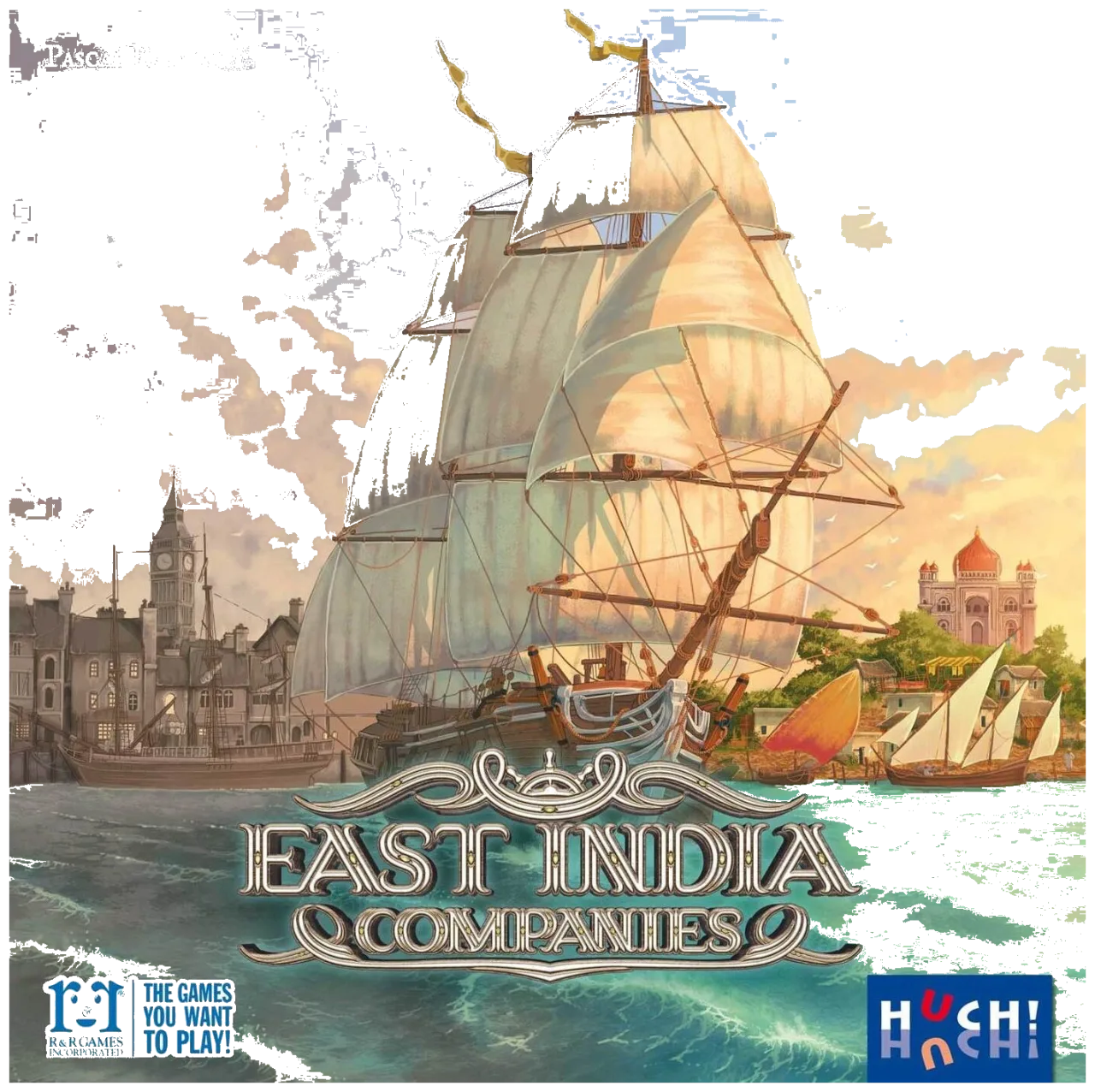
Overview
At a glance
Is this game right for my group?
ABG editorial scores on a 1–5 scale.
Harder to teach
High replayability
Highly interactive
Scales well
Deep strategy
How it plays
How does it play?
In the 18th and 19th centuries, shipping companies aimed to strengthen the trade between the West and the Far East that had begun in previous centuries.
Core mechanisms
Key systems that shape the decisions players make.
Market
Buy and sell through a shared supply whose availability or prices can change.
Investment
Commit resources now to improve income, control, or value later.
Pick Up and Deliver
Collect goods at one location and transport them to another for rewards.
Stock Holding
Acquire shares whose value depends on companies, assets, or player actions.
Worker Placement
Commit limited workers to action spaces before opponents occupy them.
Turn Order: Stat-Based
Determine or change the order in which players take their turns.
Read the full game description
In the 18th and 19th centuries, shipping companies aimed to strengthen the trade between the West and the Far East that had begun in previous centuries. Tea, spices, coffee, and silk are commodities much consumed in Europe, and their buying and selling prices depend closely on supply and demand. Fortunes can be made and gambled depending on circumstances. In East India Companies, players manage a large shipping company that trades with far flung trading posts in India. They must manage their ships and invest in buying shares of their own company or those of their competitors. Most importantly, players have to keep an eye on the constantly fluctuating market prices! Is it better to invest your money in the stock market or in buying goods? Do they prefer to use fast ships with low tonnage or slower ships with larger holds? Whatever the players choose, their strategies will influence those of their opponents. —description from the publisher