Overview
At a glance
Is this game right for my group?
ABG editorial scores on a 1–5 scale.
Harder to teach
High replayability
Highly interactive
Scales well
Deep strategy
How it plays
How does it play?
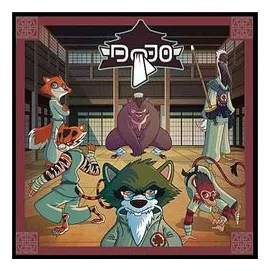
In Dojo, each player runs a dojo and tries to attract the most promising disciples. The game is played in rounds using a deck of cards, with each card showing a particular type of disciple: monkey, fox, tiger, crane, bear or raccoon (which functions as a joker).
Core mechanisms
Key systems that shape the decisions players make.
Read the full game description
In Dojo, each player runs a dojo and tries to attract the most promising disciples. The game is played in rounds using a deck of cards, with each card showing a particular type of disciple: monkey, fox, tiger, crane, bear or raccoon (which functions as a joker). Each disciple also has a skill level, shown by a belt: white, yellow, green, blue or black. During each round, one player is the dealer. Each round consists of three phases: Recruitment, Challenge and Training. During the recruitment phase, the dealer draws a card, looks at it, and gives it face-down to a player. He repeats this process until each player has been dealt a card. During the challenge phase, the dealer may be challenged. The player to his left gets the first chance to challenge. If he does not challenge, the next player gets a chance, etcetera, until the dealer is challenged or all players have declined the opportunity to challenge. If there is a challenge, both players involved (the dealer and the challenger) show their card. The card with the highest value belt wins the challenge (with ties going to the challenger). The winner gains a trophy and may exchange his card with the loser’s card, if he so desires. During the training phase, each player adds his card to his dojo. During the first round, the card is simply placed on the table; during later rounds, new cards must be added adjacent to an earlier card. The end result should be a 3x4 grid. A player who has won a trophy must place that trophy next to a column or row. After twelve rounds, the game ends, and players score points. For each row, players score points for the biggest group of cards of the same type. For each column, players score points if each card shows the same colour belt. Trophies modify the scoring of a row or column.