Overview
At a glance
Is this game right for my group?
ABG editorial scores on a 1–5 scale.
Harder to teach
High replayability
Highly interactive
Scales well
Deep strategy
How it plays
How does it play?
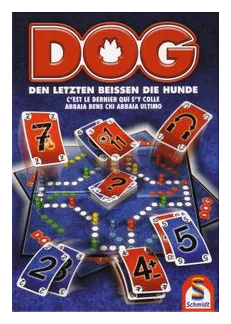
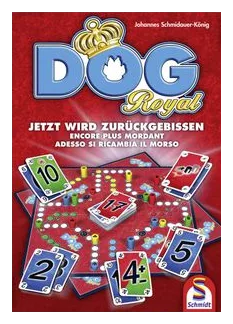
Dog Royal plays like its predecessor DOG in that the object of the game is for a player (or team) to move his (their) tokens from home to the target area as quickly as possible.
Core mechanisms
Key systems that shape the decisions players make.
Movement Points
Spend a movement allowance across spaces with different costs.
Hand Management
Time and sequence a limited hand of cards to preserve future options.
Take That
Direct negative effects at selected opponents.
Team-Based Game
Players compete in fixed teams and coordinate toward a shared team result.
Read the full game description
Dog Royal plays like its predecessor DOG in that the object of the game is for a player (or team) to move his (their) tokens from home to the target area as quickly as possible. Tokens are moved in a clockwise direction along the track on the game board according to the value on the cards played. The first player or team to move all of its tokens to the target area first wins. What distinguishes Dog Royal from Dog are two twists: First, Dog Royal includes a number of special cards not present in the previous game. You can move 1-7 spaces, switch the location of two tokens, draw one token to another like a magnet, equal the value of the card previously played, and more. Second, each of the four tokens controlled by a player bears a symbol – king, knight, citizen, jester – and each such token has a special power. The king, for example, cannot move more than seven spaces on a turn, so all cards with a higher value cannot be used to move the king, but the king cannot be bumped off the track by any token other than another king. (Players can choose to keep the symbols face-down and treat all tokens the same, if desired.)