Overview
At a glance
Is this game right for my group?
ABG editorial scores on a 1–5 scale.
Harder to teach
High replayability
Low interaction
Scales well
Deep strategy
How it plays
How does it play?
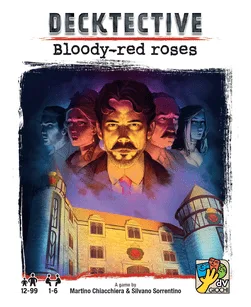
The noise of a carriage breaks the silence surrounding the Tudor mansion. The duke Edward York, just arrived, makes a gruesome discovery: count Ferdinand Tudor lies lifeless next to a bush of bloody roses.
Core mechanisms
Key systems that shape the decisions players make.
Cooperative Game
Players coordinate their actions toward a shared objective and win or lose together.
Hand Management
Time and sequence a limited hand of cards to preserve future options.
Memory
Remember previously revealed information, positions, or sequences.
Storytelling
Create or extend a narrative in response to prompts or game events.
Read the full game description
The noise of a carriage breaks the silence surrounding the Tudor mansion. The duke Edward York, just arrived, makes a gruesome discovery: count Ferdinand Tudor lies lifeless next to a bush of bloody roses. What has happened? Is it a tragic accident or a brutal crime? Collect the clues: a broken pocket watch, an astrology manual, the winning ticket of a horse race. Can you put the evidences together to solve the mystery? Decktective: Bloody-red roses is a co-operative investigation game, featuring a 3D crime scene. Players must solve a mysterious case. They play their cards to share information, discard cards that they think will lead them the wrong way, discuss the clues they find with the other players, make hypotheses and deductions to find the solution! At the end of the game, players must answer several questions: Each correct answer is worth points. The more points they get, the better their outcome. On their turn, players either play a card from their hand and put it face up on the table, sharing the information on it or they discard a card from their hand face down to the archive and are not allowed to talk about the information on it, until the end of the investigation. Each card has a value from 1 to 10 in the upper left corner. A card can only be played face up on the table if its value is equal to or less than the current number of cards in the archive. —description from the publisher