ABG All Board Games
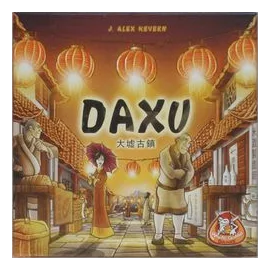
Daxu box art

Daxu

Players

2

Time

?-?

Age

10+

Weight

1.44

Rating

6.43

Fit

Teach 2.3

Teaching signal

Replay 4.0

High replayability

Interaction 3.7

Highly interactive

Scaling 4.0

Scales well

Strategy 4.5

Deep strategy

Control 3.0

Luck-sensitive

Table feel

Daxu has a high level of direct confrontation and strategic depth in confrontation. Players need to pay frequent attention to other players' actions. However, there is less emphasis on cooperation in the game.

Replay value

Daxu offers a high degree of variability with its gameboard, multiple paths to victory, and variable setups. The presence of expansions adds new content and gameplay elements, enhancing replay value. The game provides deep strategic possibilities and room for improvement over time. Player interaction is moderate, and the game scales well with different numbers of players. While it may take some time to learn, the depth it offers makes it worth the investment. Overall, Daxu has a strong replayability score of 7.95 out of 10.

Luck profile

Daxu has a moderate level of luck involved in the game. Random elements such as dice rolls or card draws have a notable but not exclusive impact on the game outcome. Players have some ability to mitigate the effects of randomness through strategic decisions and planning. The game outcome is balanced between luck and strategy, with neither element dominating. Overall, Daxu offers a good mix of luck and player agency.

Overview

In Daxu, players collect sets of cards of six different types of shops: bakery, rice wine shop, wood cutter, basket maker, silk dealer, and tea house. Each round, several cards are flipped and players decide whether they want the cards for themselves or they want to give the cards to their opponent. Obtained cards go into your personal collection, and some of these cards provide (or make you lose) reputation points. If you focus too much on one type of shop, your customers will be dissatisfied and your opponent will gain points instead of you! At the end of the game, players score points based on who holds majorities in which shops. Holding a majority by only a few cards earns points for you, but from a certain point on, that majority provides points for your opponent instead! Whoever collects the most points from majorities and reputation points wins.

Editions

Edition Year Language Publisher / Region
No editions imported yet.

Files

No files imported yet.

Commerce

No commerce mappings imported yet.

Credits

Designers

1
J. Alex Kevern

Artists

1
Klemens Franz

Publishers

1
White Goblin Games

Linked items

No linked items imported yet.